

Emphasizing the enhancement of data exchange and collaboration through Building Information Modeling (BIM) within the AEC industry, this article explores interoperability tools, standardization efforts, and innovative practices, as exemplified by the Fondation Louis Vuitton project.

Collaborative Strategies in the Fondation Louis Vuitton Project
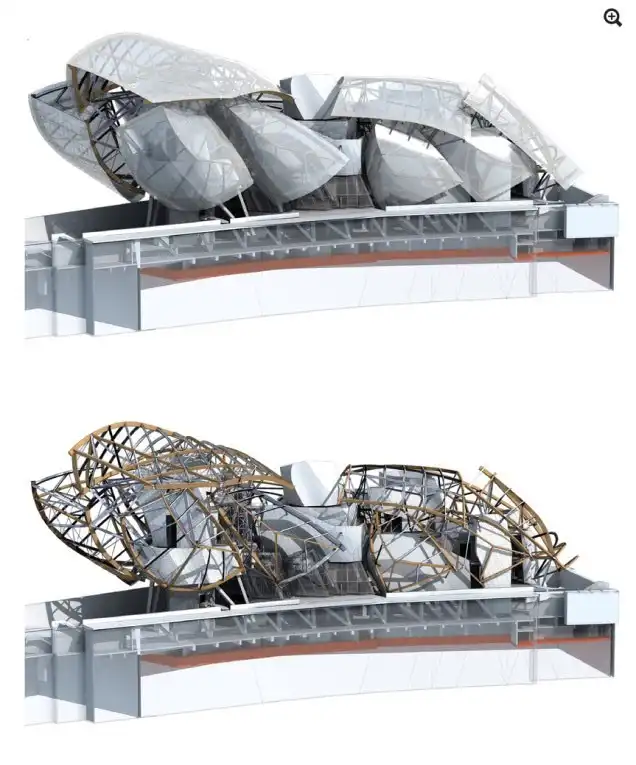
To ensure effective collaboration from the outset, the process for the Fondation Louis Vuitton (FLV) project was meticulously designed as a highly cooperative effort, involving over ten distinct companies and a variety of software tools: Digital Project, SketchUp, various Autodesk applications, BoCAD, SolidWorks, ANSYS, NASTRAN, Sofistik3D, 3DVia Composer, Solibri, Tekla Structures, Rhino 3D, and Grasshopper 3D as noted by Mauro Buffa and Chuck Eastman. Significant efforts were dedicated to establishing mappings between these diverse programs and digital projects.
Buffa and Eastman include, to facilitate flawless digital collaboration with many project partners, Gehry Technologies implemented a web-based 3D platform for file management and project coordination, which they named GT Global Exchange (GTX). The BIM model was employed throughout every project phase, from the initial design to the final stages of construction. The project’s success demonstrates the critical importance of project information exchange and data management, enabled through a shared 3D model among a global project team.
Without BIM, this building might never have been attempted. – Mauro Buffa and Chuck Eastman
The Need for Interoperability Tools in BIM
Building information modeling (BIM) is a technological framework that encompasses building information management throughout a facility’s entire lifecycle. It is employed to generate, communicate, and analyze comprehensive and intricate data.
The AEC industry is frequently partitioned into a diverse array of specialized disciplines and subdisciplines, encompassing architecture, interior design, structural engineering, acoustics, environmental systems, mechanical, electrical, and plumbing (MEP) engineering, fabrication, construction, and various other domains. Such fragmentation engenders the development of discipline-specific vocabularies and the use of disparate software tools for production, which, in turn, introduces significant challenges, including data loss, complexities in data management, and inefficiencies in establishing an integrated system during data exchange. These issues highlight the necessity for effective strategies to advance data exchange and integration among BIM systems, leading to the research into different interoperability solutions.
Methods for Achieving BIM Interoperability
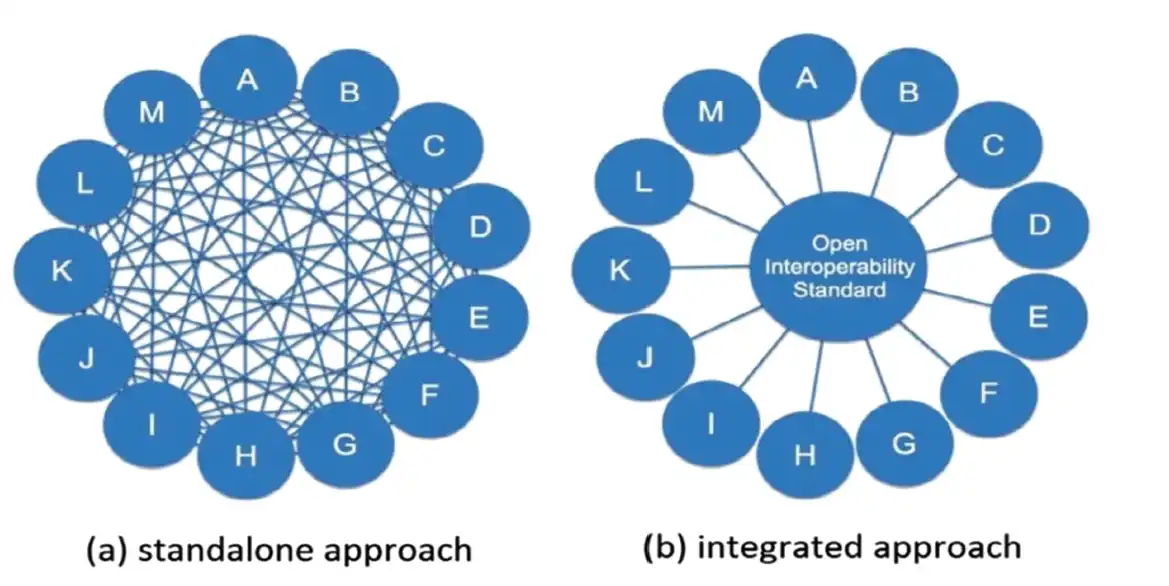
Concerning interoperability, it is crucial to establish a framework that facilitates the exchange of BIM data and operations to manage building information. In this context, interoperability tools refer to the smooth exchange of model data across tools or between diverse formats. When discussing the achievement of interoperability in the landscapes of production and information exchange, Sacks and Pikas elucidate four methods to ensure interoperability:
- adopting a proprietary approach by utilizing a single software vendor’s ecosystem;
- enabling direct file exchanges through one-to-one application interfaces;
- leveraging open, industry-wide standards, such as IFC (Industry Foundation Classes), to foster seamless integration;
- employing model servers to facilitate data exchange within a common data environment.
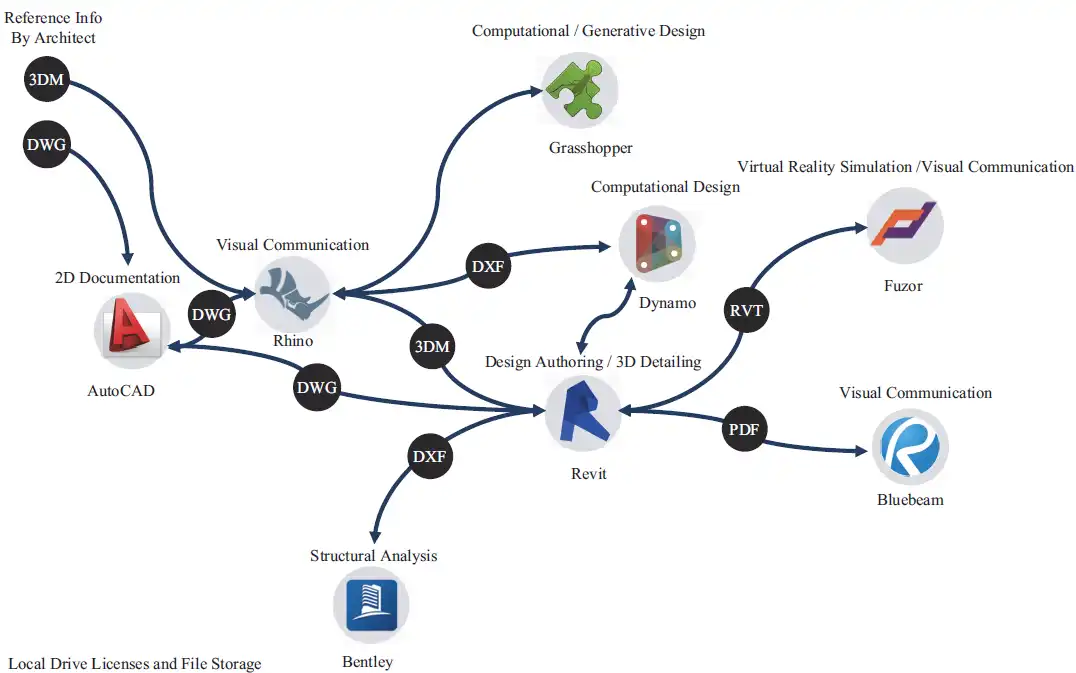
The Environment of BIM tools for museum conceptual structural design © Magnusson Klemencic Associates
Data Exchange Formats
Demirdogen et al. categorize data exchange formats into four main types based on the work of Aray?c?, who identifies direct links, proprietary exchange formats, and public product data model exchange formats as the primary methods. They also include model-server-based data exchange, as introduced by Eastman et al., as a fourth method.
“Direct links: The receiver program re-writes information extracted from a sender program through the API (application programming interface).”
“Proprietary exchange format: This type of data exchange depends on file-based data exchange. The underlying reason behind a proprietary exchange format is that every commercial organization can create its product. Organizations produce a specific file format to support them. Some important examples of proprietary exchange formats are RVT (Revit), DWG (AutoCAD), DGN (Bentley Systems), etc.”
“Public product data model exchange formats: This type depends on open and publicly managed language and schemas. Different product data models refer to different geometry, relations, process, material, and performance data structures. It means that interoperability issues will be observed during the process if there is a data definition difference in the same object between two product data models.”
“Model-server based data exchange: Data exchange between stakeholders is performed on a database management system (DBMS). This type of data exchange can also be called a common data environment or BIM server.”
Standardization Efforts
Various efforts are underway to standardize processes across different stages to enable interoperability between BIM software. One notable initiative proposed by the buildingSMART alliance is the Industry Foundation Classes (IFC), which offers an extensible and consistent data set that can be shared among multiple BIM systems. A structured data model for both geometric and non-geometric information of architectural elements and their relationships is offered by Industrial Foundation Classes (IFC). IFC files foster the integration of specific attributes, such as material specifications and vendor details, alongside essential information about building elements, according to Demirdö?en et al.
The open standard ISO 16739-1 (2018) and the IFC schema are extensively adopted by professionals within the AEC industry for their comprehensive and interoperable data exchange capabilities. Created based on XML language, Green Building Extensible Mark-up Language (gbXML) is another schema type providing information about building zones, surfaces, fenestration, and environment data in data exchange between BIM and building performance simulations (BEPS). Additionally, as a data model component, the Construction Operations Building Information Exchange (COBie) facilitates the transfer of information between the owner and the construction team, primarily focusing on the operation and maintenance of assets and structures.
Innovations in BIM Interoperability Tools
Abdirad and Dossick assert that to solve the problem of reproducing modeling efforts across BIM tools, prominent businesses, and software designers were attempting to foster BIM interoperability solutions that allow the exchange of information among tools. Lombardi highlights that open-source methodologies like Bhom and Speckle present compelling approaches to enhancing interoperability tools by facilitating data exchange and aligning domain-specific vocabularies through concept mapping.
In addition to conventional approaches, extensions and plug-ins serve as a critical strategy for facilitating interoperability, pivoting to bridge system gaps, and addressing domain-specific challenges.
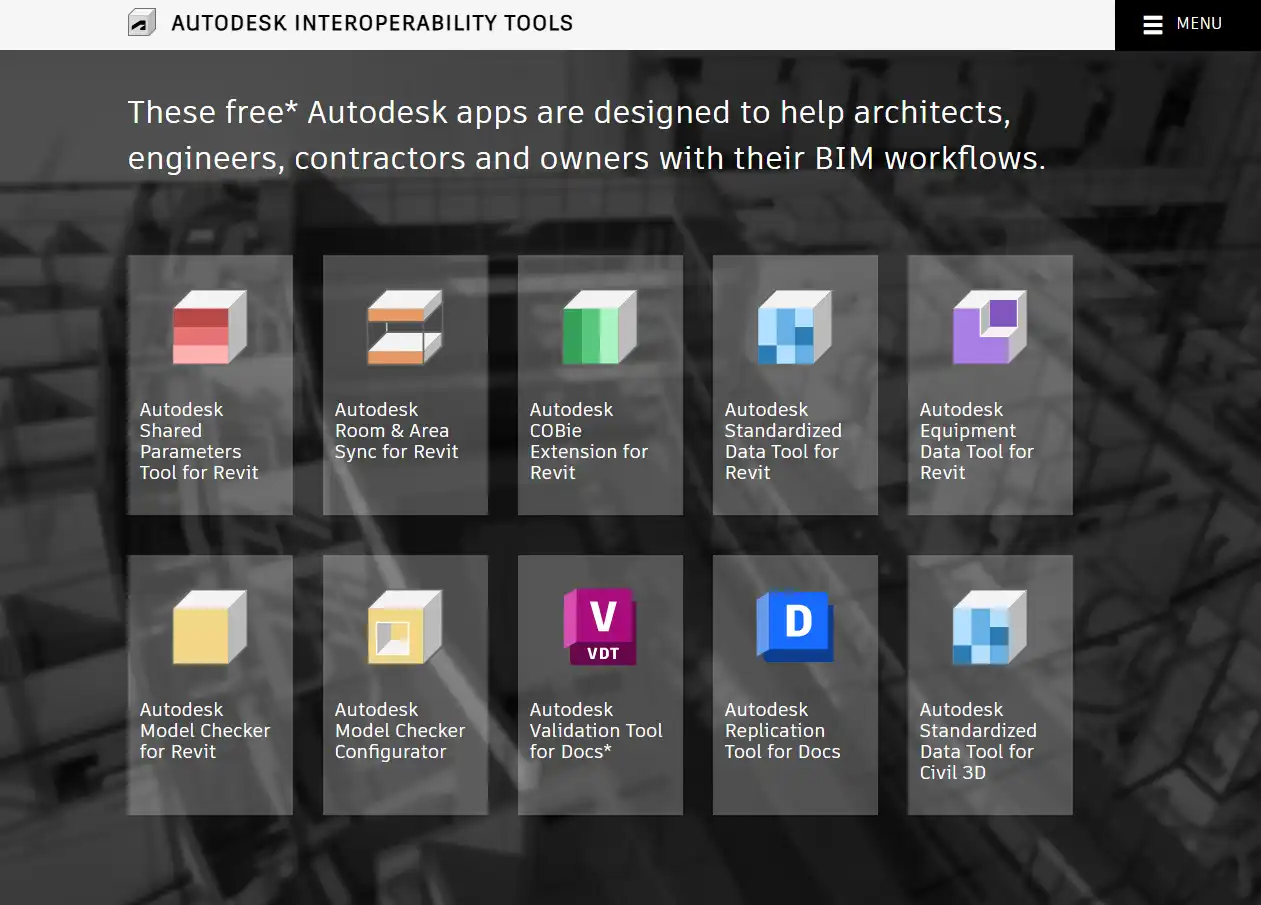
In this context, Autodesk Interoperability Tools is a prime example of such a solution. Autodesk provides a comprehensive suite of tools meticulously engineered to streamline data integration between BIM and CAD software, thereby playing a pivotal role in ensuring interoperability across diverse platforms and workflows.
Conclusion
According to Sacks and Eastman, interoperability (open architecture, data management) refers to the specifications outlining how service providers should deliver their building model data, including the formats to be used, ensuring that information can be exchanged seamlessly among project team members and between the project and downstream stakeholders, such as those involved in facilities maintenance and operations.
Conclusion: Professionals in the AEC sector can successfully handle the inherent complexities of fragmented workflows by utilizing solutions like those developed by buildingSMART. This will create a more unified, effective, and sustainable ecosystem that improves the integration and smooth exchange of data across various disciplines, tools, and software throughout the lifecycle of a project.
Learn with PAACADEMY: Check out the workshops at PAACADEMY to learn from the industry’s best experts how to use advanced parametric design tools, AI in design workflows, and computational design in architecture!
