


Often associated with thick slabs of concrete and gray concrete, Soviet Architecture has roots that tie to far more than the stereotypical hyper- efficient structure. Architecture is inherently a reflection of the people it houses – it has the power to uplift their importance, but can also exist to show the power of the authorities. In Soviet Architecture, this message is especially clear.
To understand the architecture of the Soviet Union, one must understand the history of its formation. The Union of Soviet Socialist Republics (USSR), was an empire that stretched from the Baltic Sea to the Pacific Ocean, and consisted of many Republics within the empire; many of these republics are what make up Europe today as individual countries. Succeeding the Russian Empire following the Russian Revolution to abolish the monarchy, the Soviet Union formed as an authoritarian and Socialist nation, and as the century progressed, the architecture revolved around quickly developing the country and progressing urban expansion to be able to rebuild the cities after war and revolution in a low-cost way. Through this are the multitudes of residential projects that display communist values through their construction. Because of the focus on living spaces, the places of community and gathering were poorly designed, if not abandoned completely.
Styles of Soviet Architecture
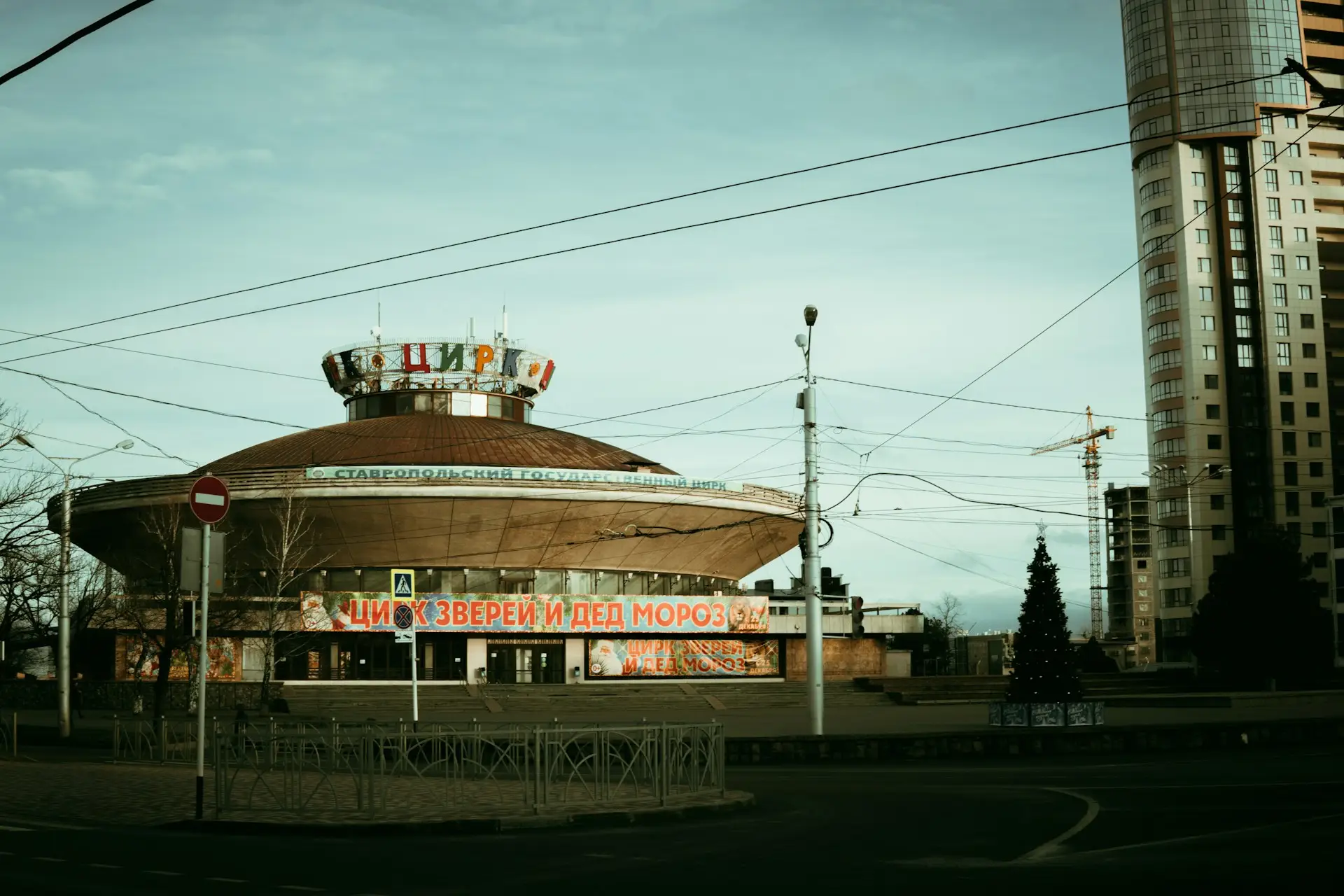
Before the 1917 Revolution, Russia, much like the rest of Europe, was influenced by National Romanticism and Art Nouveau, both of which were at their peak after the Enlightenment and found power in the political reflection of the nation it was in. Culture, religion, and other forms of expression embedded themselves in these styles and within Russian Architecture under the Monarchy. During and after the revolution, National Romanticism was pushed away as it was tied to the corrupt monarchy, and designers and artists worked with the new political agenda to create a Soviet state. New styles emerged through this new political rule.
Brutalism
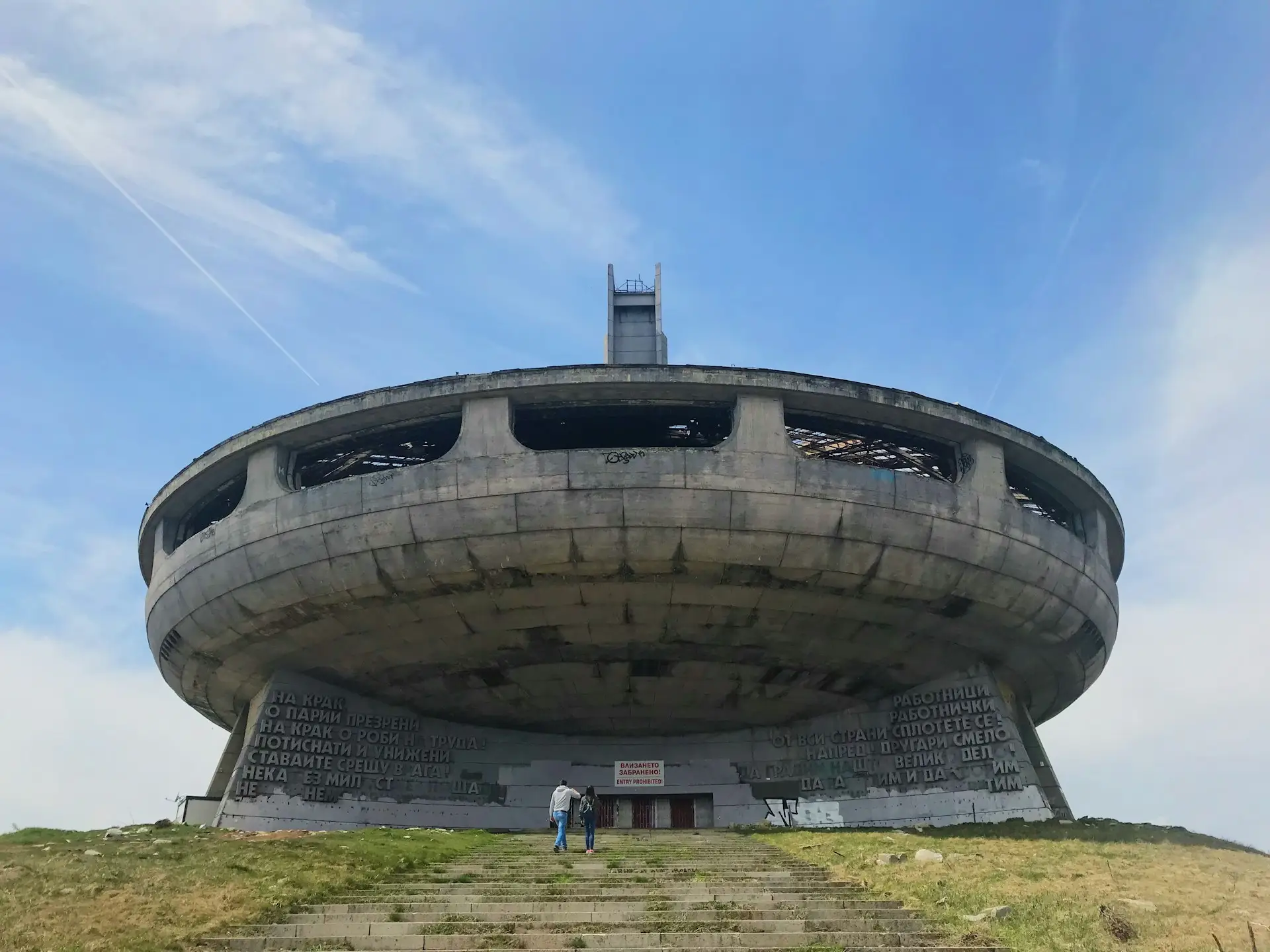
Much of Soviet Architecture takes elements of Brutalism, and although it is not entirely influential on the architecture, it is essential to the conversation. Soviet Architecture started during World War II in the United Kingdom. It used raw materials to rebuild cities fast during the postwar era, making the forms simple and bare.
Constructivism
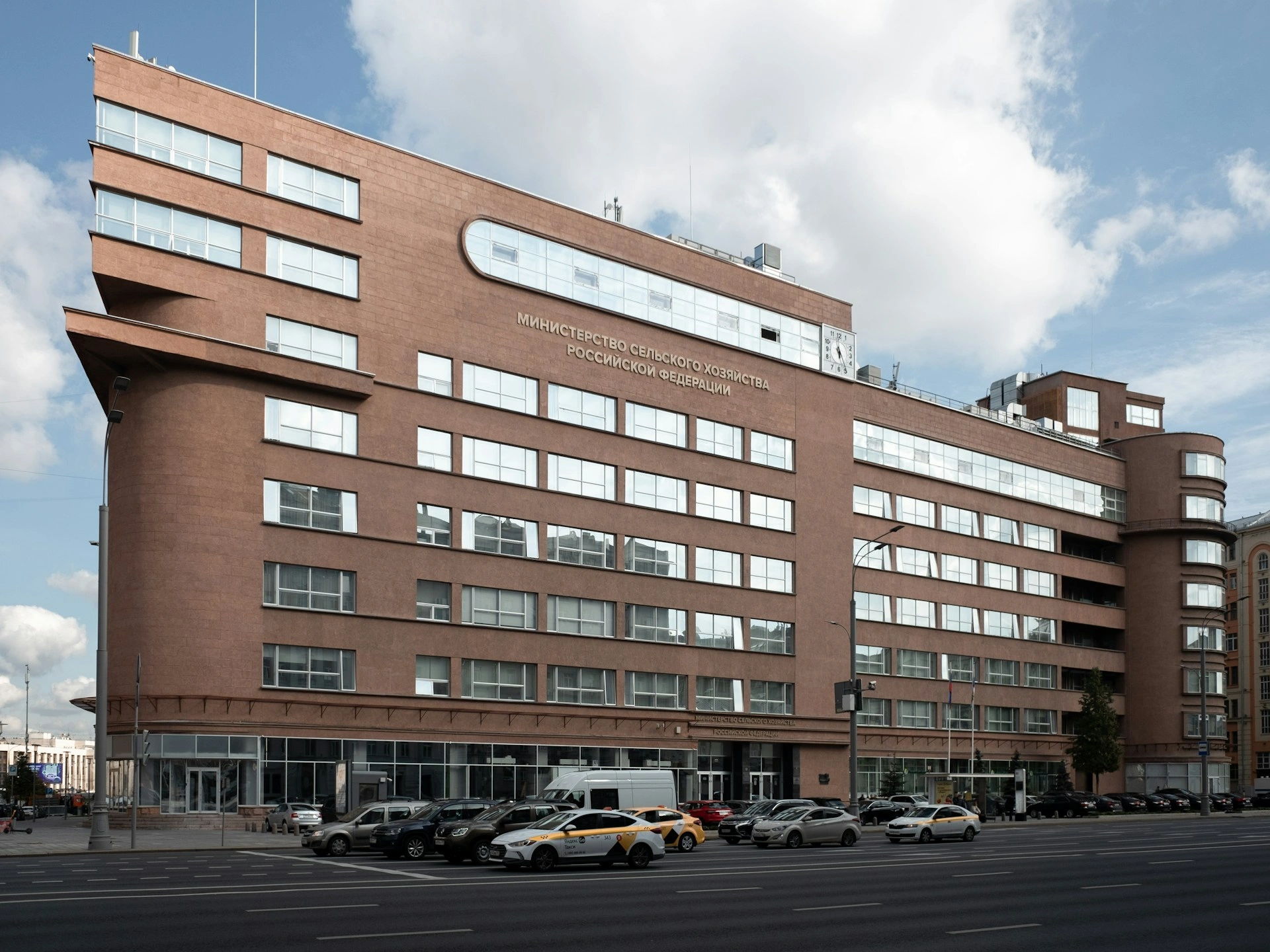
With a newly established Soviet Union taking large-scale projects with limited engineering technology, Avante-garde design manifested itself as Constructivism in the Soviet Union. Paralleling the Bauhaus movement in Eastern Europe, Constructivism used geometry and minimal design experimentally; it focused less on ornamental elements and more on industrialization and mechanics. Constructivism faded away before World War II, but carried over in future Soviet architectural styles.
Stalinism

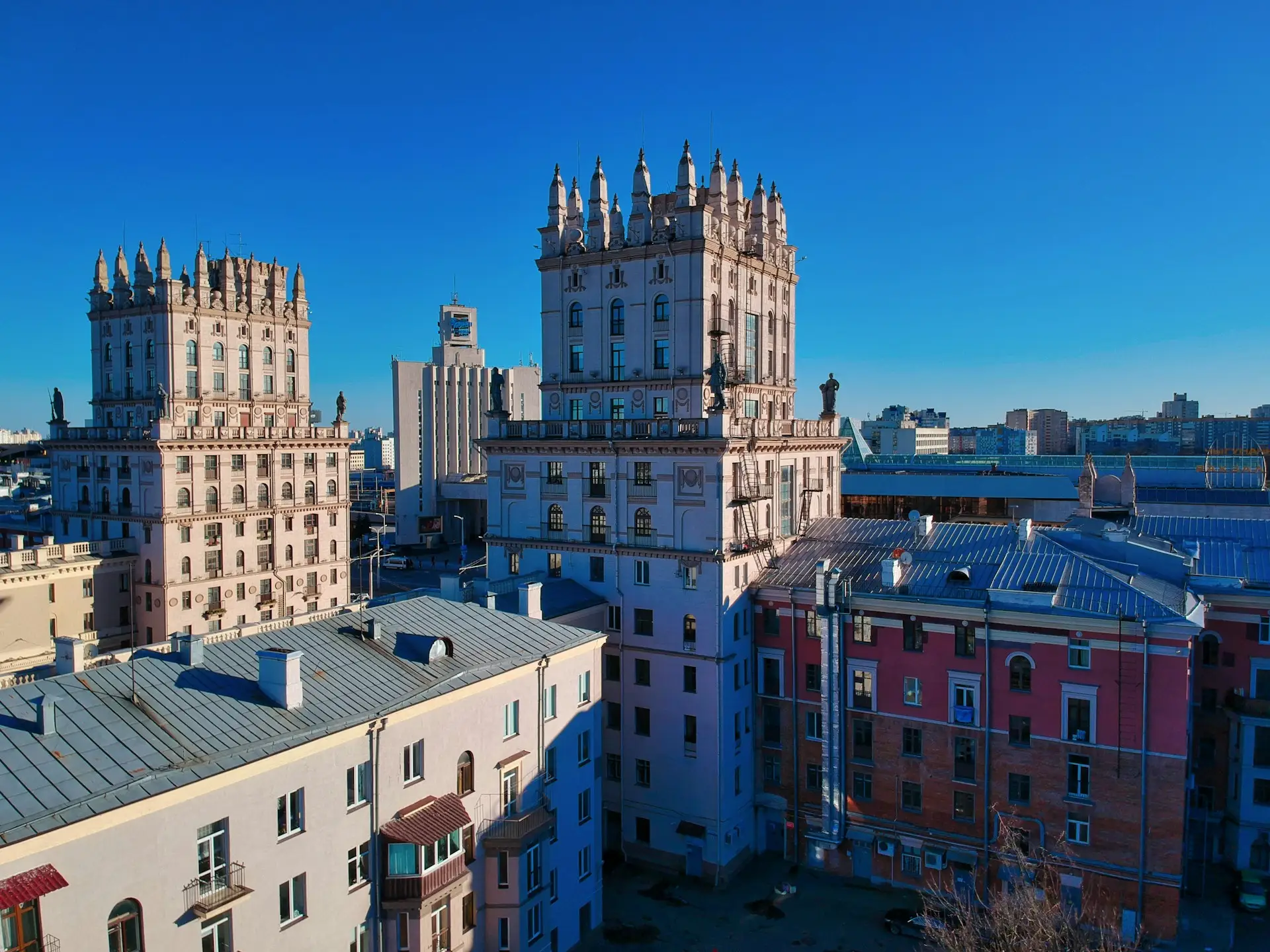
Moscow was the leader in the socialist realism art movement – the project was commissioned by Moscow University, and prevailed during the reign of Josef Stalin (around 1933 to 1955). Stalin experimented with architecture as a method of showing off his power and ideologies, and he used prison labor to build these structures. Classical references were used in designing these structures: columns, arches, and moldings. However, Stalin wanted an image of modernity, and did not seek to replicate Gothic and Russian Architecture.
In addition to Architecture, Stalinism was particularly concerned with urban planning. Large streets and straight roads were designed to host military parades, as a way of showcasing their glory.
Residential structures were also built to display who was inside; residential buildings for government workers and elites were built lavishly, while residential projects for working class people were built with minimal materials to reduce cost.
Soviet Modernism
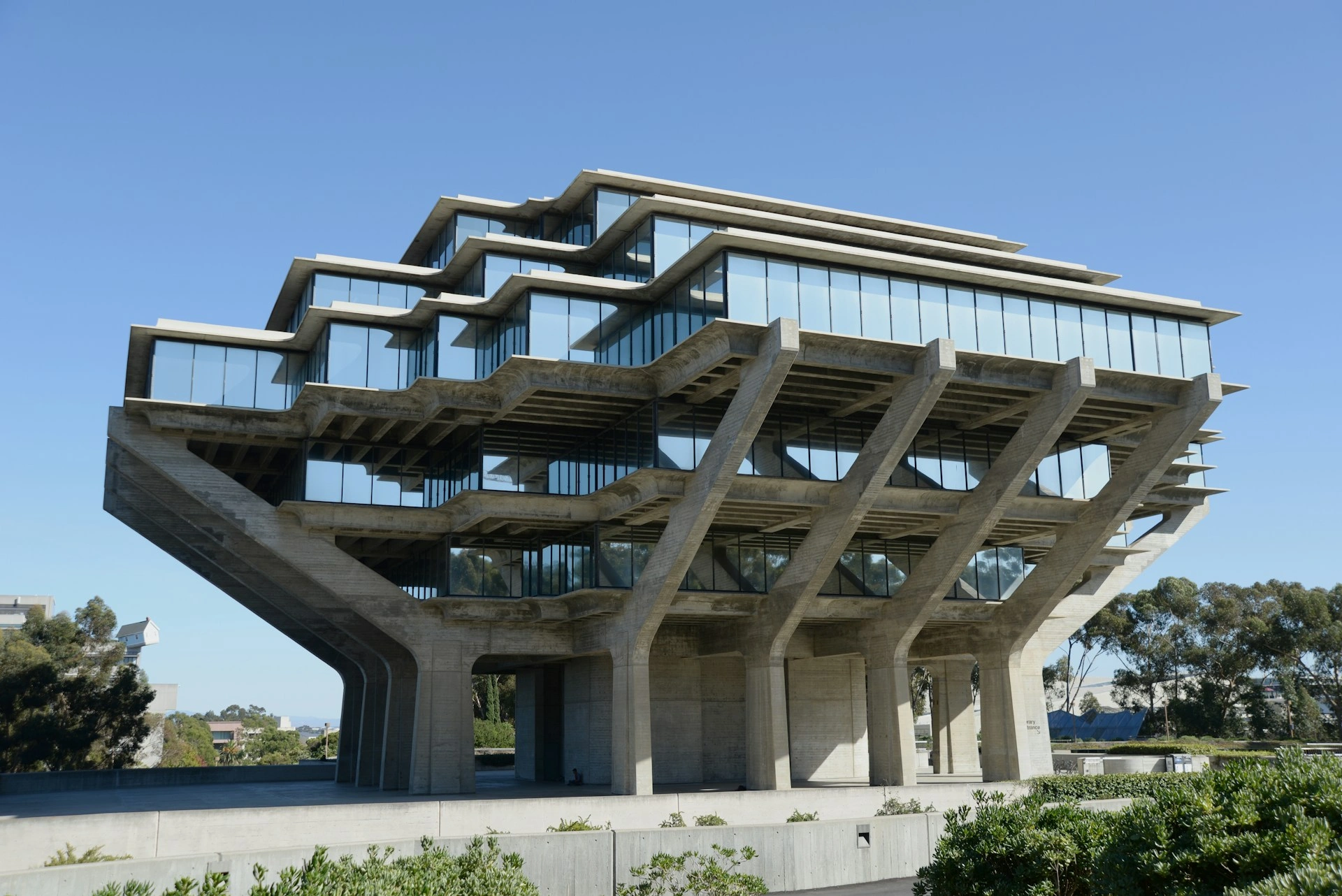
As a branch of the Late Modernist movement sweeping the West, Soviet Modernism emerged as they realized architecture was not only to display power but that it ties into socio-cultural components. After a period of Stalinist Architecture that led to low conditions in the Soviet Union, Soviet Modernism sought to revitalize the nation and to bring it a distinct prosperous identity, but much of these Utopian projects failed.
Soviet Architecture & Designs
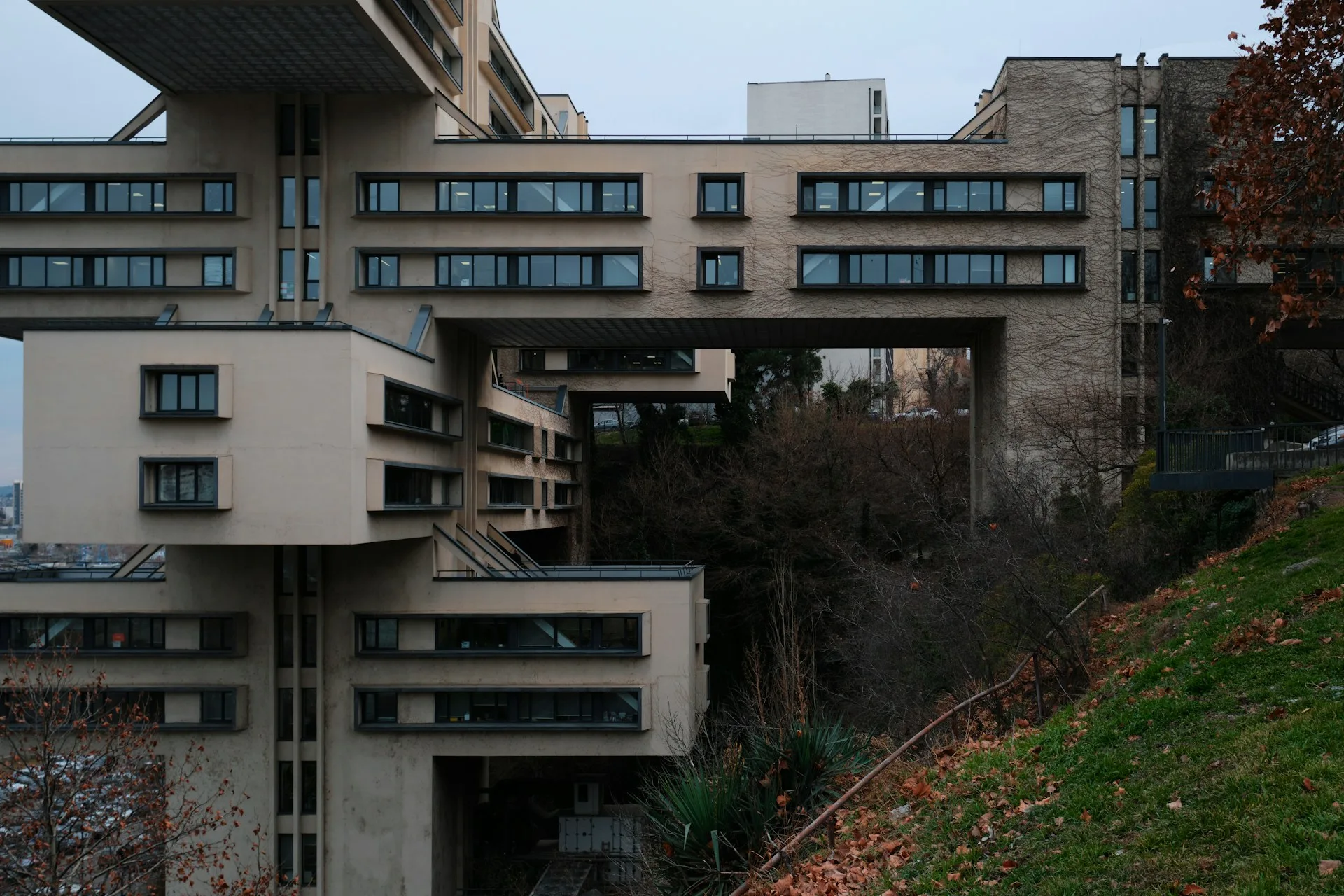
Soviet architecture was a reflection of the political and ideological aspirations of the USSR, often using bold, monumental forms to showcase power and progress. Designs like the Ministry of Highways Building and the Russian Embassy in Havana exemplified the use of Brutalist and Constructivist styles to convey authority, stability, and control. Despite its austere aesthetics, Soviet architecture also explored more human-centered approaches, as seen in projects like the Kyiv Crematorium, where design was used to create therapeutic and reflective spaces.
Ministry of Highways Building

Designed by: George Chakhava and Zurab Jalaghania
Year: 1975
An iconic example of Brutalism, the Bank of Georgia headquarters currently operates as the main bank headquarters today and was constructed as a central office of the Georgian Ministry of HIghway Construction. The designer was also the Deputy Minister of Highway Construction, taking elements of Constructivism in his design. He wanted most of the building to be in air space, so that it could take up as little ground space as possible.
Russian Embassy Building, Havana
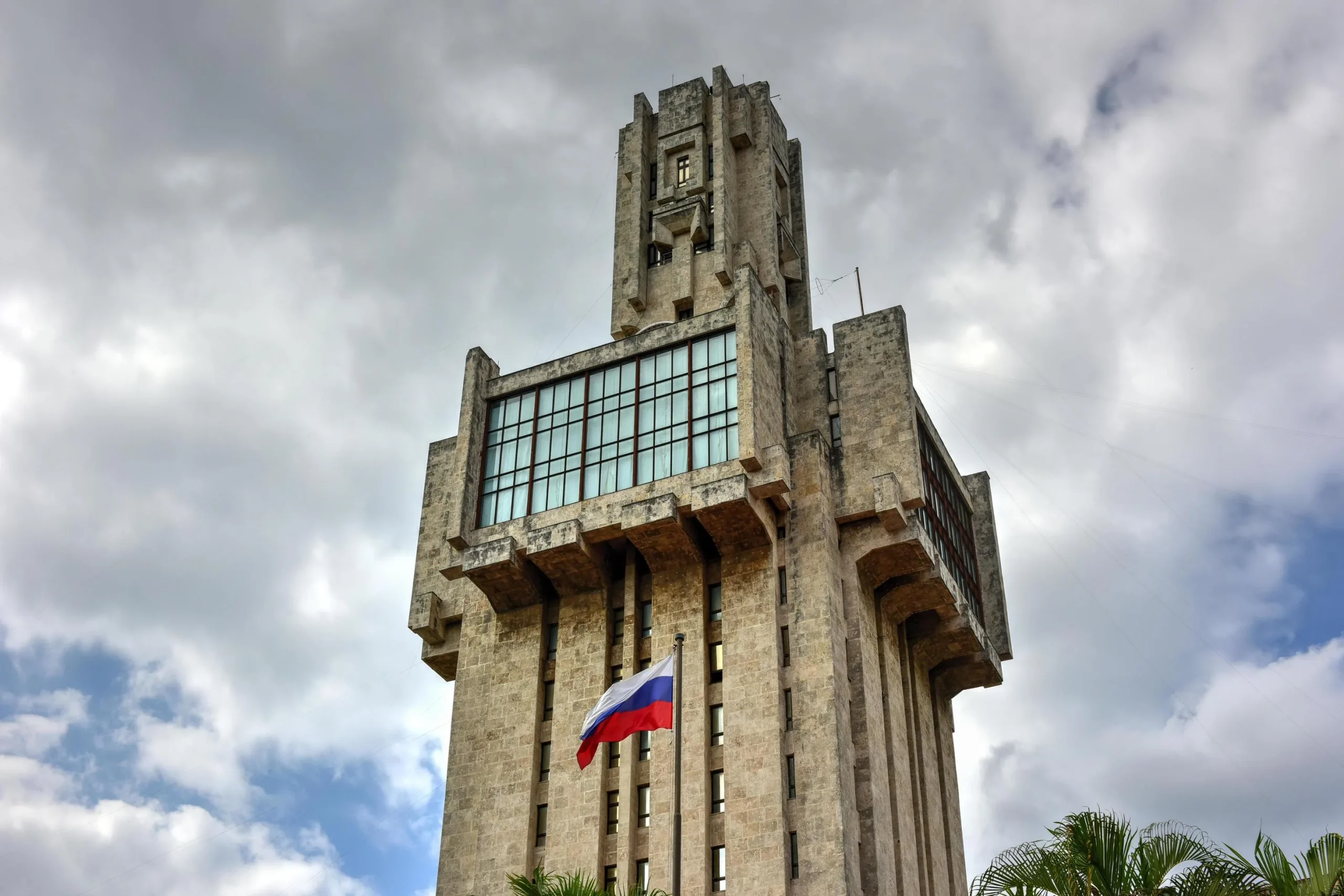
Designed by: Alexander Rochegov and Maria Engelke
Year: 1978-87
Coined the “Russian Sword,” the Russian Embassy building towers over all other buildings in the area in a Constructivist style, using thick concrete and small windows to show the closeness and stability of the Communist nation in Cuba. At the time it was built, Russia had 7000 troops in Cuba, and the building displayed Russian protection and surveillance over the nation. Today, Havana still has the same skyline as it did during the Soviet Union’s rule.
Kyiv Crematorium
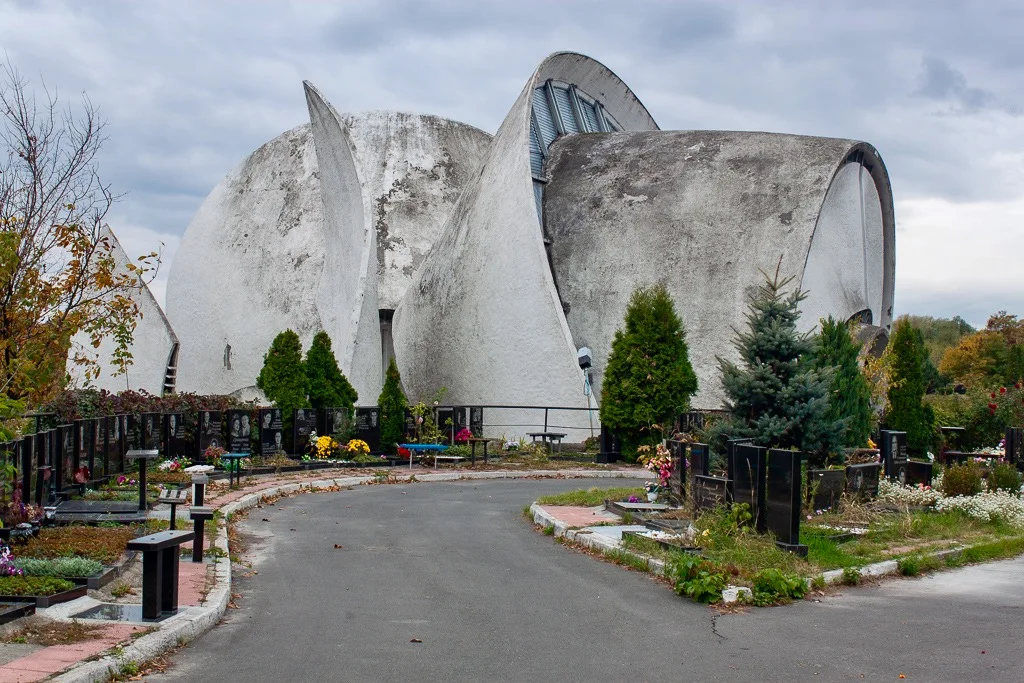
Designed by: Avraam Miletsky
Year: 1968-81
When first proposed, the creation of a crematorium was opposed by the public due to the connotation of destroying bodies with the victims of the holocaust, but Miletsky offered the crematorium as a therapeutic design, and the halls avoided association with the industrial cremation process. Using curving, geometric structures, the dome-like mirrored entrance is said to represent a flame, and be therapeutic to those mourning. Built on top of Bajkova Hill behind the Baikove Cemetery, the crematorium is a part of the Memory Park.
Central Research Institute of Robotics and Technical Cybernetics

Year: 1986
The building’s design mimics a rocketship, and it is one of the largest scientific research centers in Russia. The building housed the development of the Soyuz spaceships and other probes during the Space race, and was a key part of the Chernobyl disaster. At 77 meters tall, the building can be seen from afar. Today, the building is used for creating robotic complexes, intelligent control systems, information tools, nanotechnology, and mechatronic and laser systems.
How has Soviet Architecture impacted the contemporary movement?
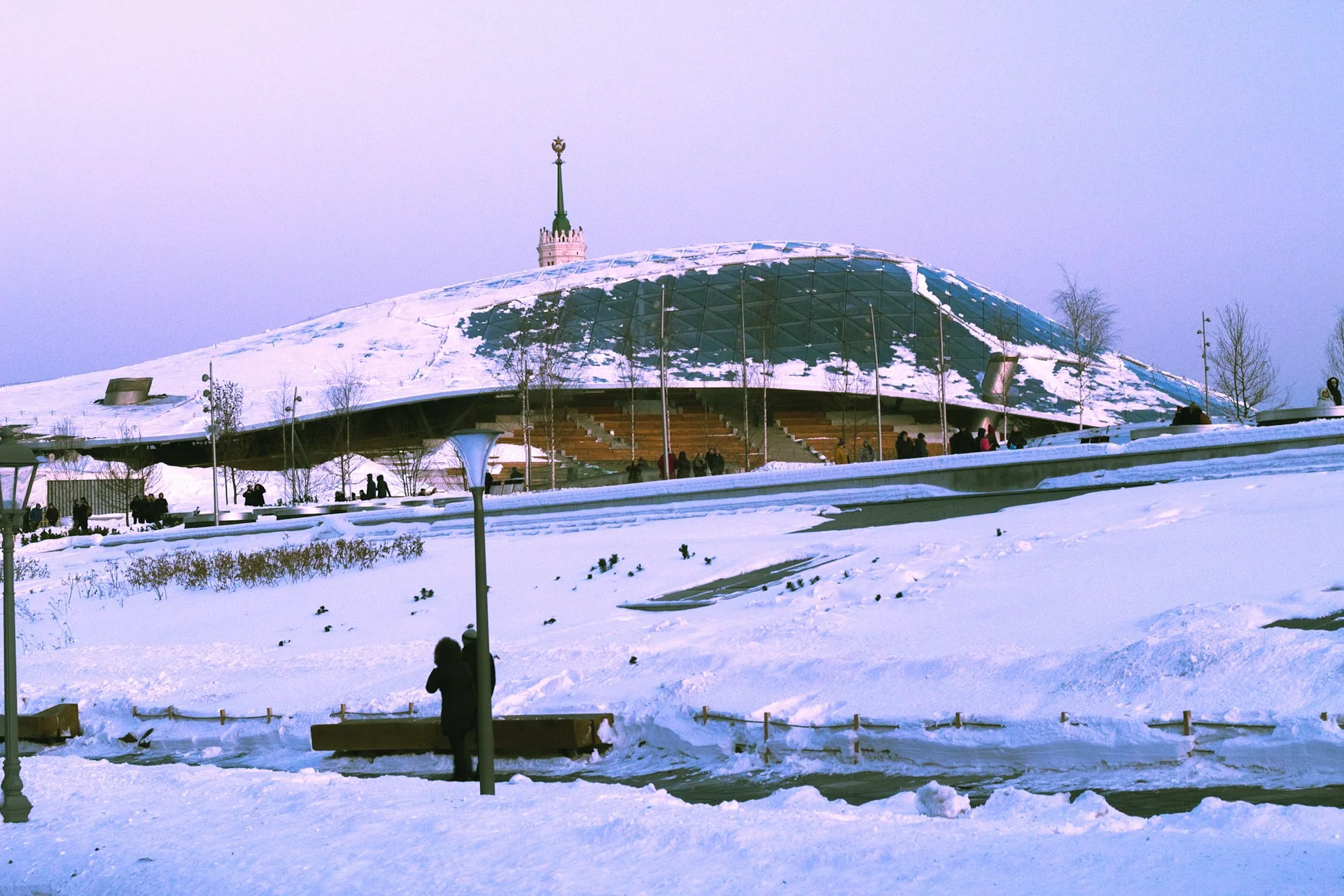
Soviet Architectural styles are still in use today, and this has significantly impacted urban expansion – with communism apparent in every structural component, Eastern European countries question how to move past the Soviet Union. New Architects seek to create public spaces and to house the human desire to connect and explore, rewriting the legacy of the USSR.
Contemporary projects, such as the Zaryadye Park, designed by Diller Scofidio + Renfro in Moscow, Russia, seek to create a new future for the people in these urban environments. Built on the site of a canceled Stalinist skyscraper, the Zaryadye Park seeks to rewrite the history of the specific location. The site provides a public space, simultaneously taking on the role of park, urban plaza, cultural landmark, and recreational area. Using layers of landscape, the park cantilevers over the river.
Projects like these, from architects from Russia and beyond, seek to revitalize Russia. The legacy of the Soviet Union still lives in the architecture today and the people of this former nation have complex feelings about it – they honor the art but look down on its representation of control – and these feelings contribute to this unique modern architectural path.
