


A commenter on the Second Avenue Sagas (SAS), which is a transportation blog that focuses on New York City’s train station, explained that it is more than just a means of commute that takes you from place A to B; it is an experience, where you see artists, performers, angry old women, political diatribes, people singing to themselves and so much more. Regardless of the station’s cleanliness, it is a place where stories are told, and other times, it is a place of refuge for the homeless. As per the commenter on SAS, all his extraordinary stories begin with, “on the train the other day…” and he believes that this is what makes New York City special.
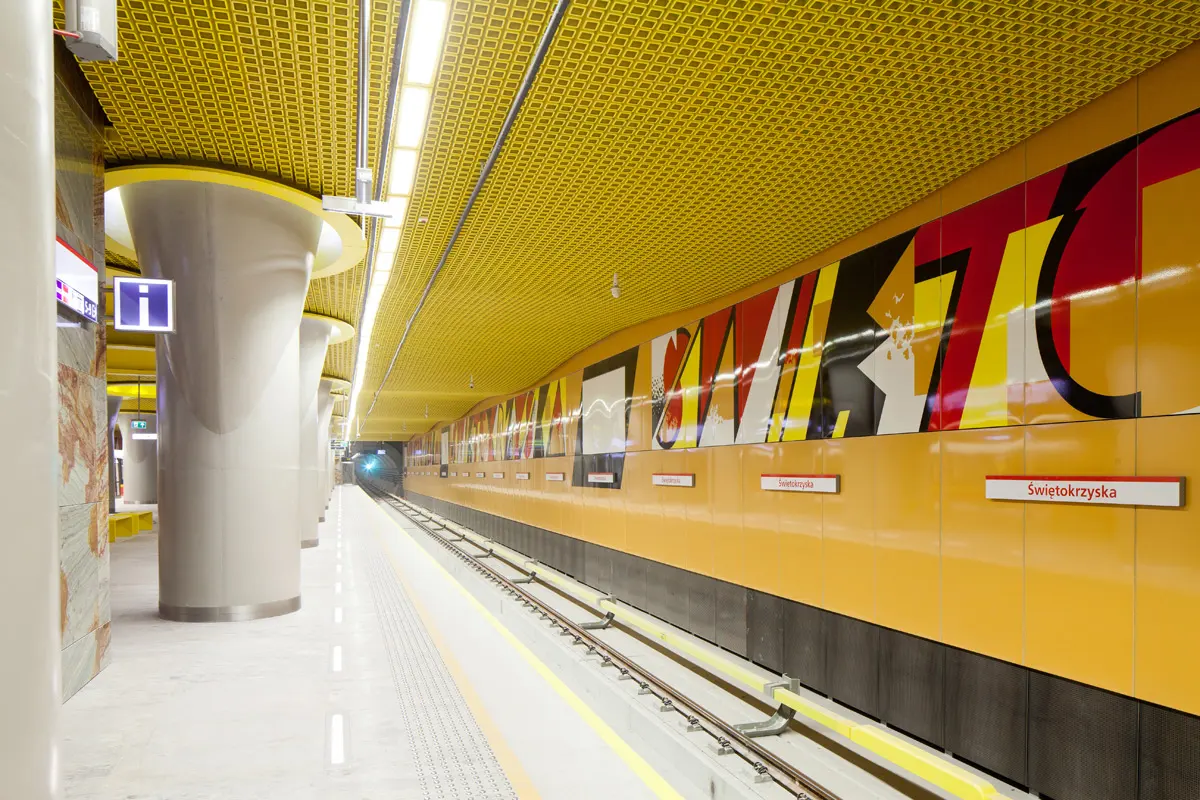
If you think about it, people write books and make movies about the NYC subway station. For this reason, it is no surprise that architects design unique ones to enhance the overall experience and capture the stories in a more beautiful way.
Many of the metro stations, such as those in Paris, Moscow, and Stockholm, are architectural marvels featuring intricate details that blend aesthetics with functionality. Moscow’s Komsomolskaya station is renowned for its historical mosaics and ornate chandeliers, which date back to the medieval period. Like other architectural masterpieces, train stations are designed to embody local culture and history. This not only enriches the environment but also encourages people to use subway stations for a full cultural experience rather than commuting by car.
In this article, we will explore 10 of the coolest subway stations around the world.
St. Petersburg
Architect: Soviet Era Architects and Engineers
Location: Saint Petersburg
Year built: 1955
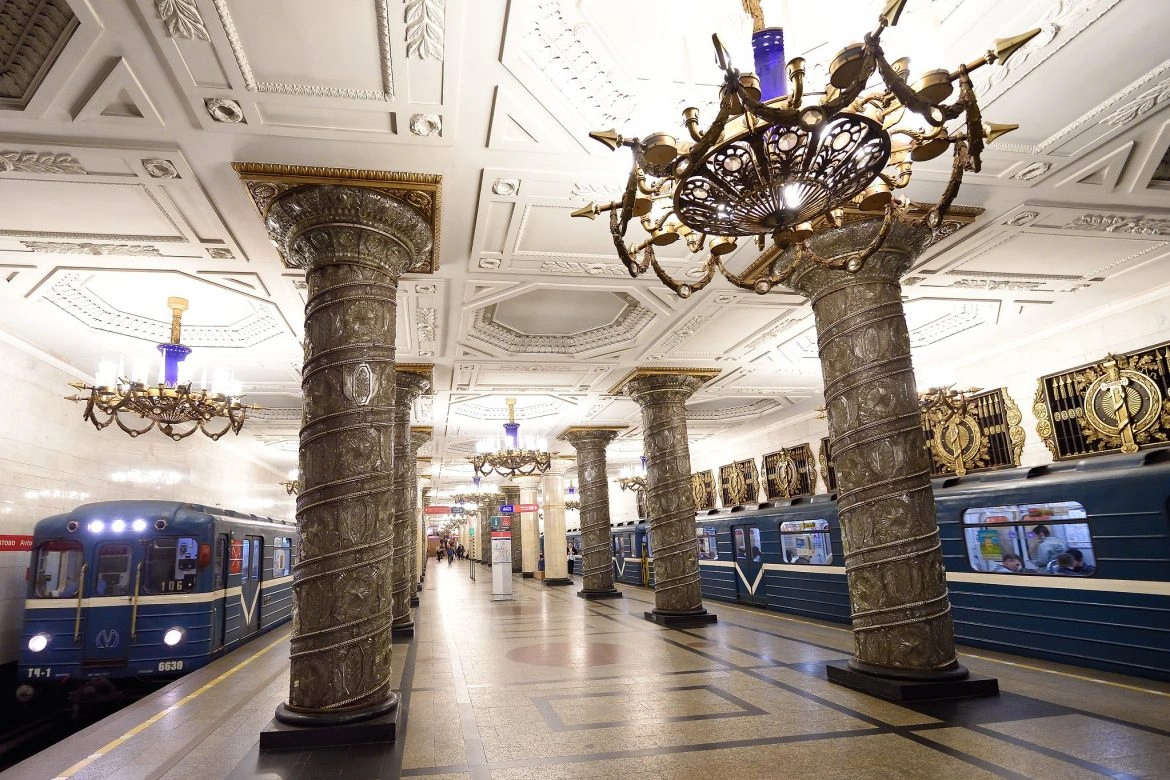
Visiting Russia’s famous subway station is the quickest and easiest way to understand the country’s history and architecture. It is renowned for its grandeur, elegance, cultural significance, and artistic expression. St. Petersburg subway station was designed during the Soviet era of Russian history, which lasted from 1917 until 1991.
A unique feature of the station is that it is known to be an underground palace because of its Stalinist architecture that contains neoclassical and classical elements, lavish ornamentation, symbolism, and propaganda. This means the design has function and aesthetics that carry an entire nation’s history with its chandeliers, marble columns, and extensive artwork. The station is one of the deepest in the world, adding complexity and uniqueness to its construction because engineers needed to develop methods to excavate deeply into the soil without compromising the structure.
World Trade Center Transportation Hub
Architect: Santiago Calatrava
Location: New York City, USA
Year built: 2016
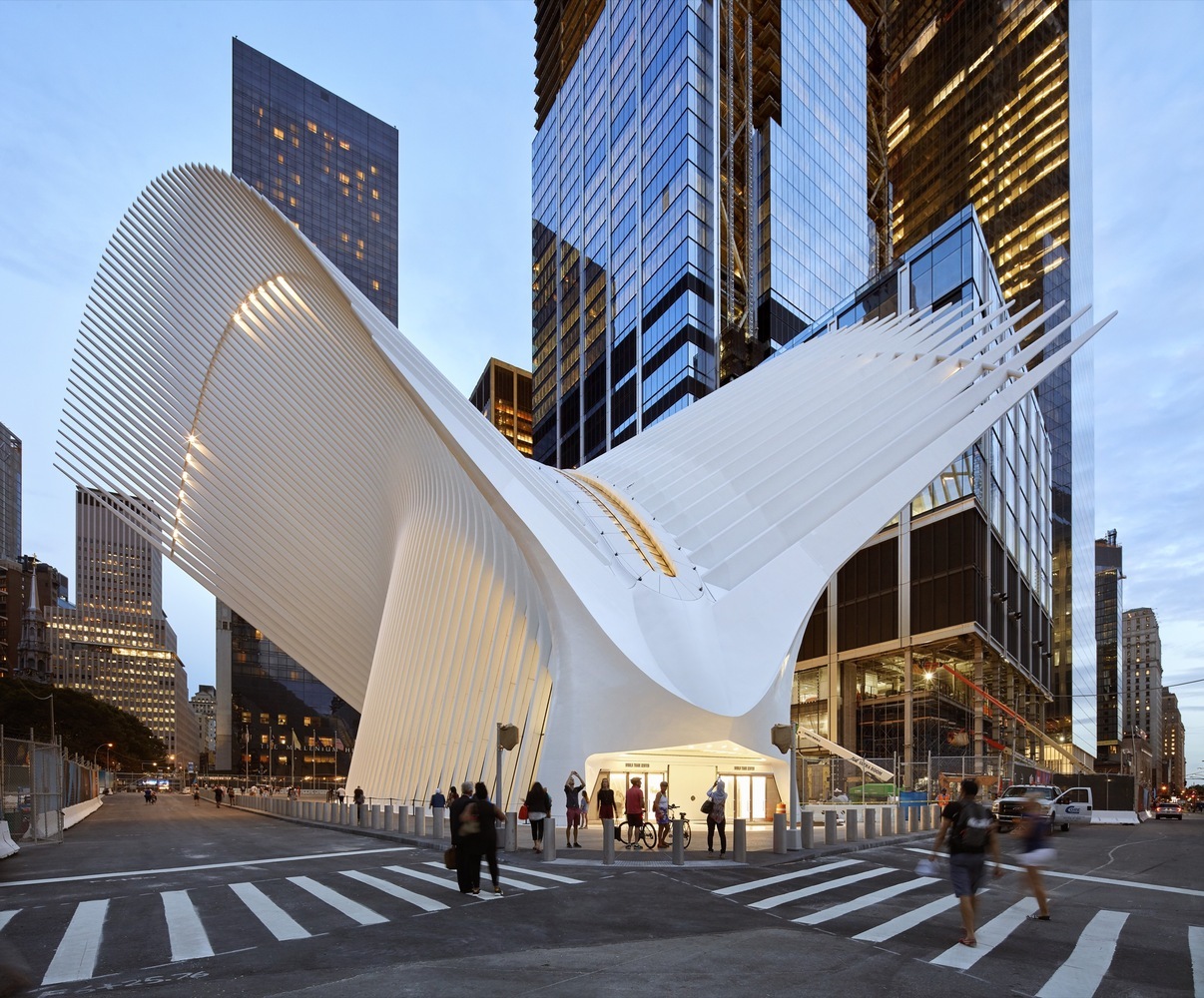
As soon as you catch sight of the World Trade Center in New York, also known as the Oculus, you can immediately tell it is a work of Calatrava. The Spanish architect is known for incorporating vibrant structural steel ribs into his buildings, which are clearly visible in this one. These ribs merge aesthetics with function, acting as load-bearing elements while simultaneously creating an immersive experience for anyone who enters. The structure is a tourist attraction due to its resemblance to a bird in flight, symbolizing hope and freedom.
It is called the Oculus, derived from the Latin word for ‘opening’ or ‘eye’ because of the skylight that allows light into the space. Inside the mesmerizing structure, functions include transportation between New York and New Jersey, as well as pedestrian connections to nearby transportation hubs, including ferries and buses. The building also features retail and dining areas, gathering spaces, and sections dedicated to art and exhibitions for the public.
The Gangnam Station
Architect: Samoo Architects and Engineers
Location: Seoul, South Korea
Year built: 2011
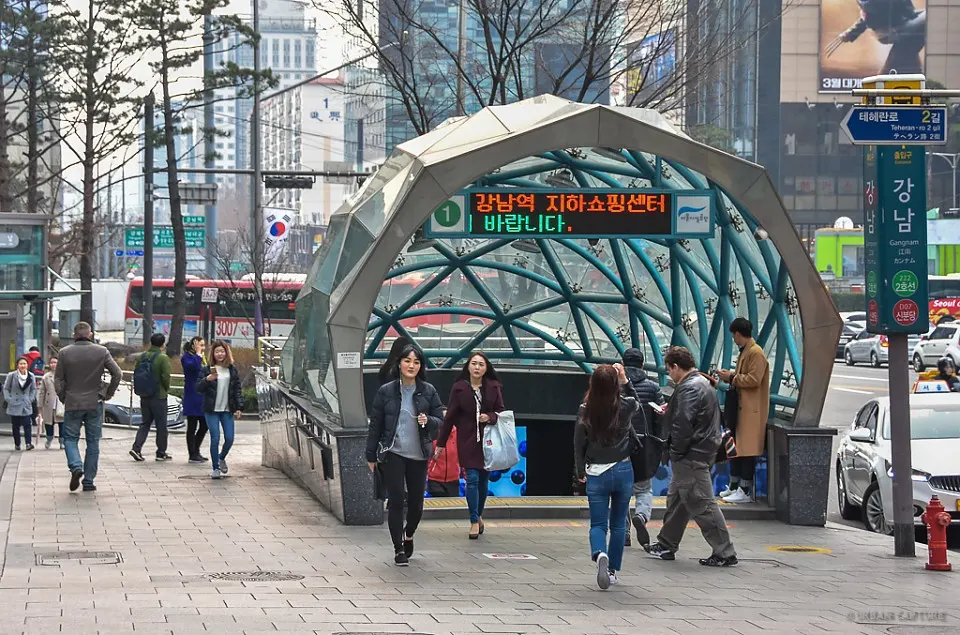
The Gangnam subway station located on the Shinbundang Line features open transit architecture with its striking glass roof that defines its presence. Its modern and sleek design, which contrasts with the busier stations in Seoul, is what makes it attractive. The station is made to be aesthetically pleasing and integrated with the surrounding environment while also being functional and easy to navigate.
Prioritizing efficiency and easily navigable spaces, having wide platforms and clear signage, as well as designing to accommodate a high number of people while minimizing the feeling of being suffocated inside the space is all achieved with the help of the glass roof that allows light into the space and gives the illusion of being on the ground rather than under it.
Formosa Boulevard Station
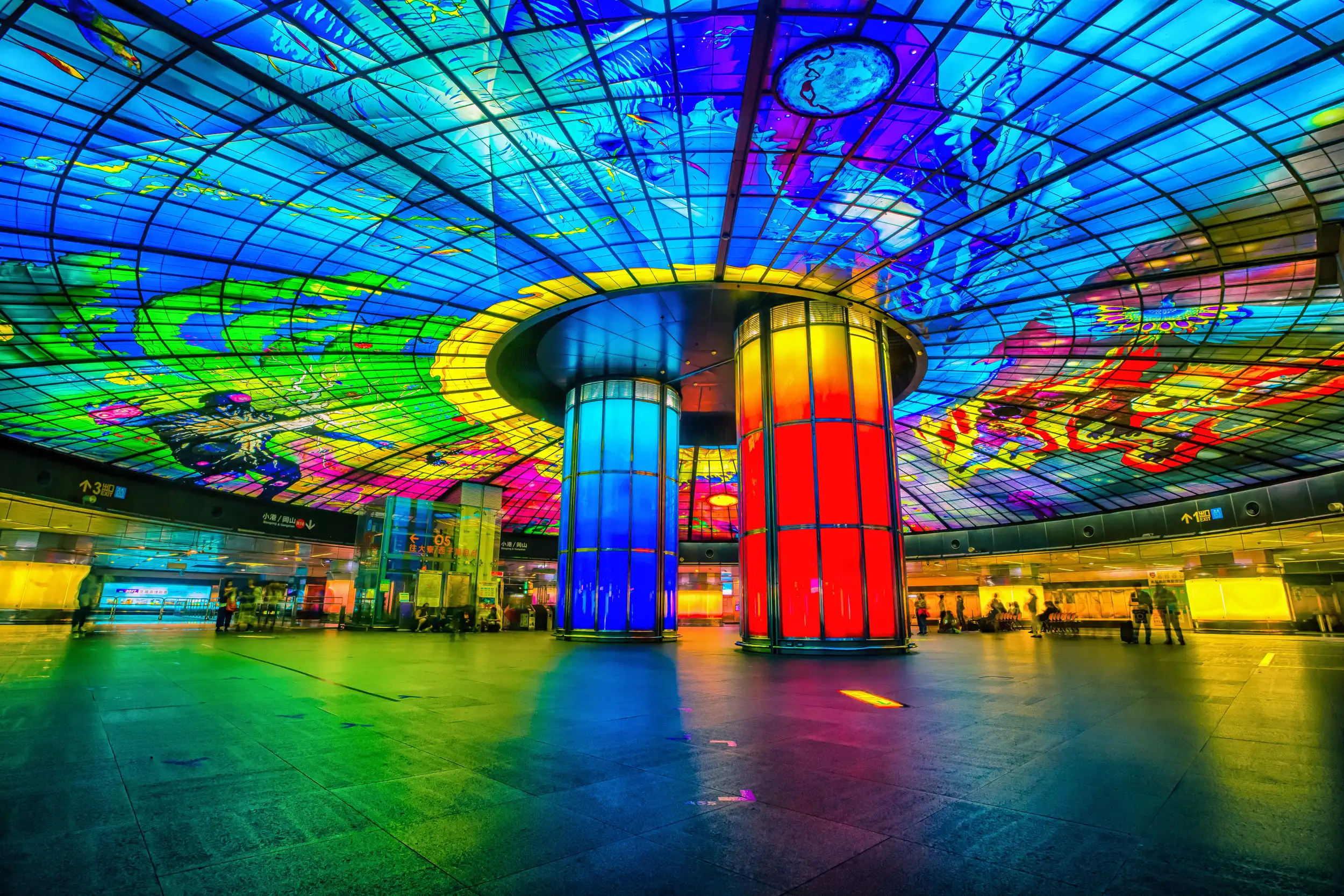
Architect: Shin Takamatsu
Location: Kaohsiung, Taiwan
Year built: 2008
Designed by Japanese architect Shin Takamatsu, the station is symmetrical, symbolizing the concept of two hands pressed together for thoughts and prayers. The most epic feature of the station is its interior ceiling of the underground level called ‘The Dome of Light’ designed by Italian artist Narcissus Quagliata, who used colored glass/rose-colored windows that represent earth, fire, water, and light. A blend of modernism with art and traditional Taiwanese motifs, the Formosa Boulevard Station is considered one of the most beautiful subway stations in the world.
T-Centralen
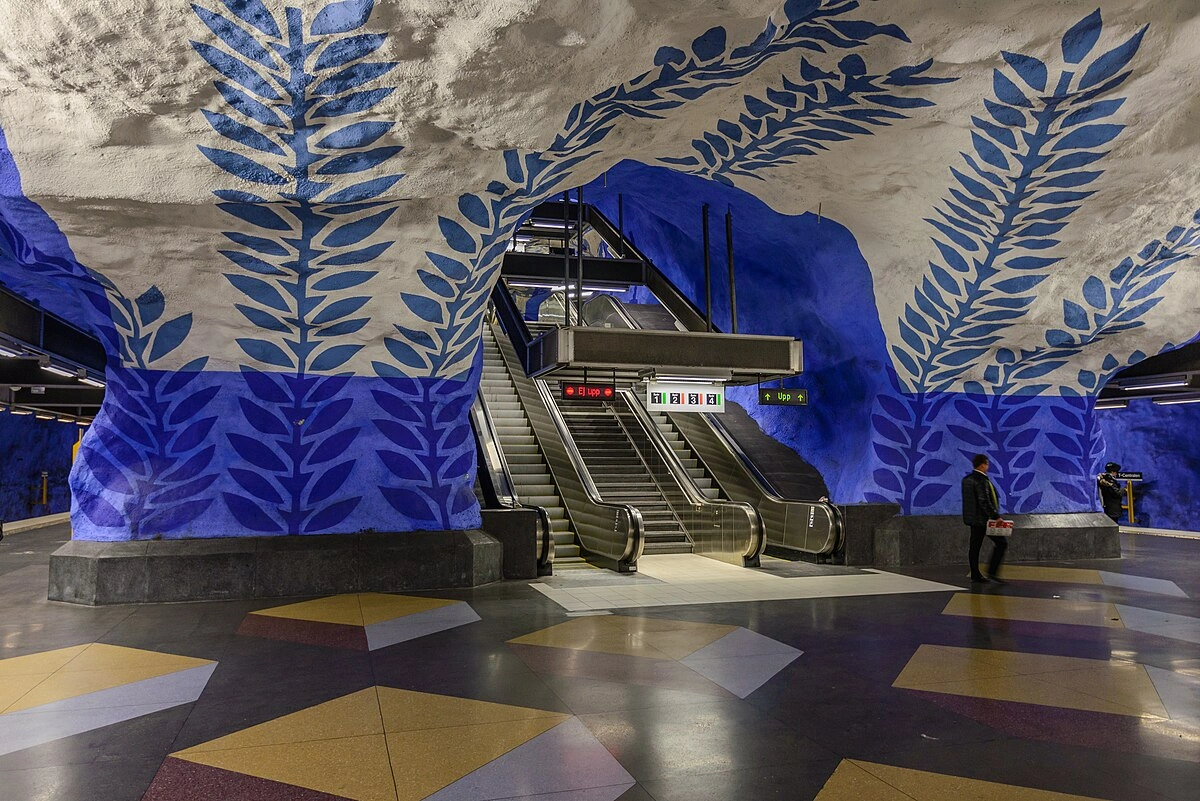
Architect: Gunnar Lené
Location: Stockholm, Sweden
Year built: 1957
Generally, the metro network in Stockholm is said to be the longest art exhibition in the world. More than 150 architects, painters, and sculptors contributed to the station’s beauty, and it became a tourist attraction for visitors from Sweden and the rest of the world.
The T-Centralen is known for its signature white and blue murals that showcase its inspiration from the natural environment where there are motifs like leaves, vines, and tendrils that evoke a sense of calm in a chaotic underground environment. The colors and design were intentionally chosen because of their soothing qualities. The station is another example of contemporary transit architecture where the design merges both functionality and aesthetics making the overall urban experience for the people easy and convenient.
Olaias Station
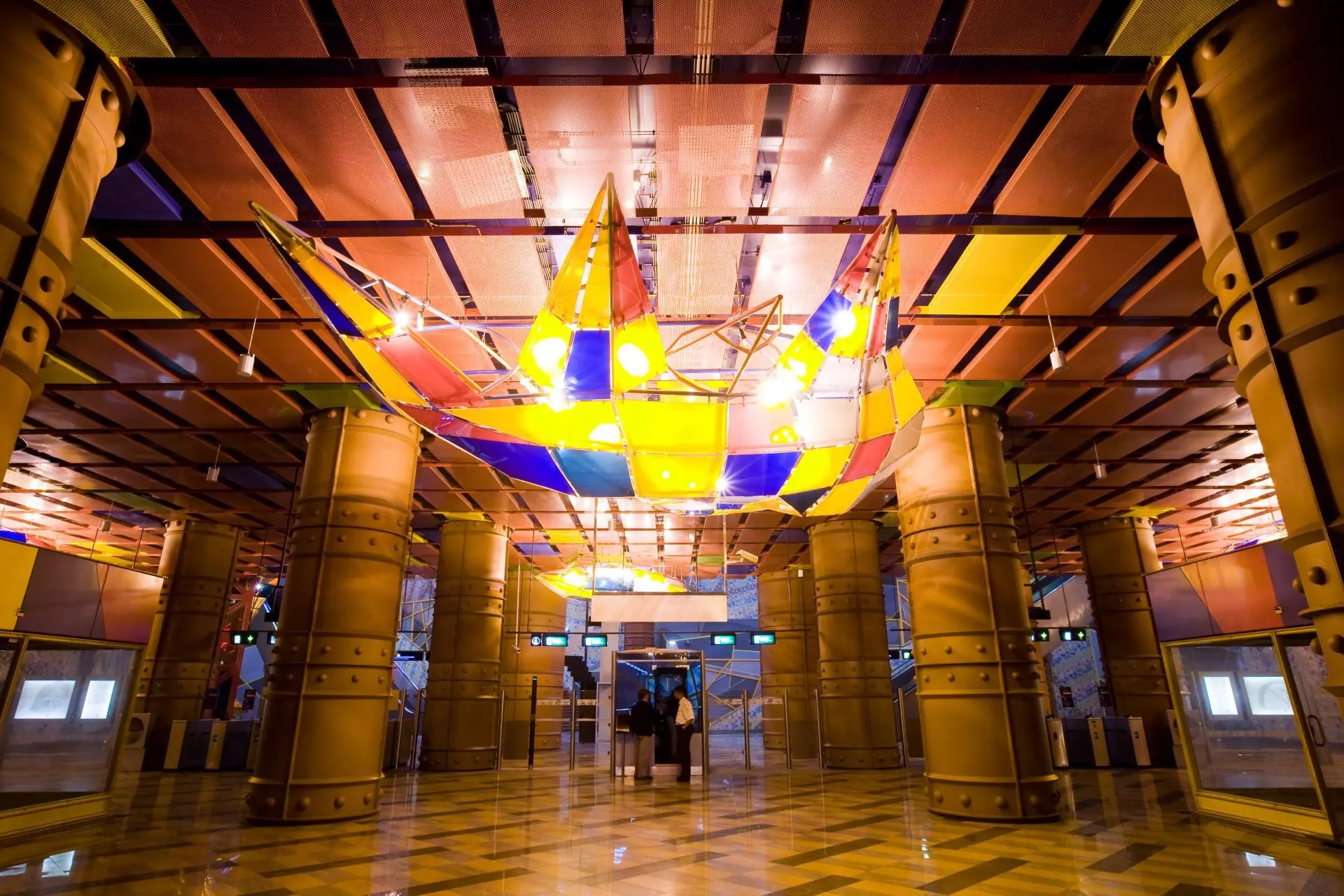
Architect: Tomás Taveira
Location: Lisbon, Portugal
Year built: 1998
Like Stockholm’s metro, Lisbon’s station is one of the largest art galleries in the world. The Olaias station’s architecture is attractive due to its postmodern feel and artistic details in the interior, like vivid mosaics, colorful geometric patterns, and dramatic columns that were completed in collaboration with creative artists like Pedro Cabrita Reis who worked on abstracts, Graca Pereira Coutinho who worked on tiles and ceramics, and Rui Sanchez who worked with colors and materials.
The architecture and design were well-thought of because it was originally meant to be for the world expo in 1998. The Olaias station symbolized energy, innovation, and optimism all of which were Portugal’s ambition for the world expo at the time.
Oxford Circus Station
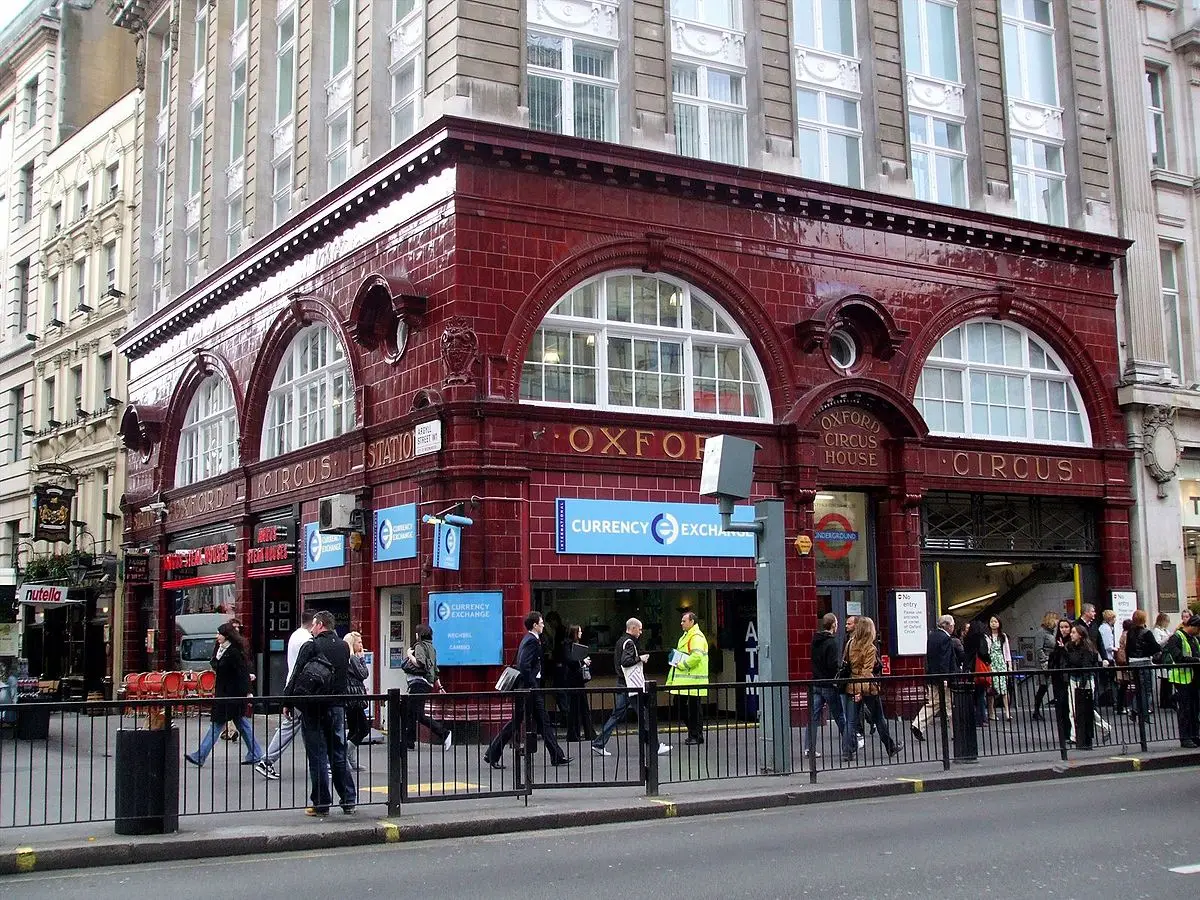
Architect: Harry Bell Measures
Location: Oxford, London
Year built: 1900
The architectural design of the Oxford Circus station reflects London’s everchanging transit design. Ever since its opening in the 1900s, the station featured traditional Edwardian architecture, which is a revival style that focuses on simplicity, space, and light, common in Britain in previous eras.
The exterior of this type of architecture includes red bricks, which is seen in the Oxford Circus Station. Later, the station became more modern and functional, with a subterranean layout that accommodated millions of people. Now, the station is filled with modern London tile art motifs that create an interactive feeling for commuters.
Abbesses Metro Station
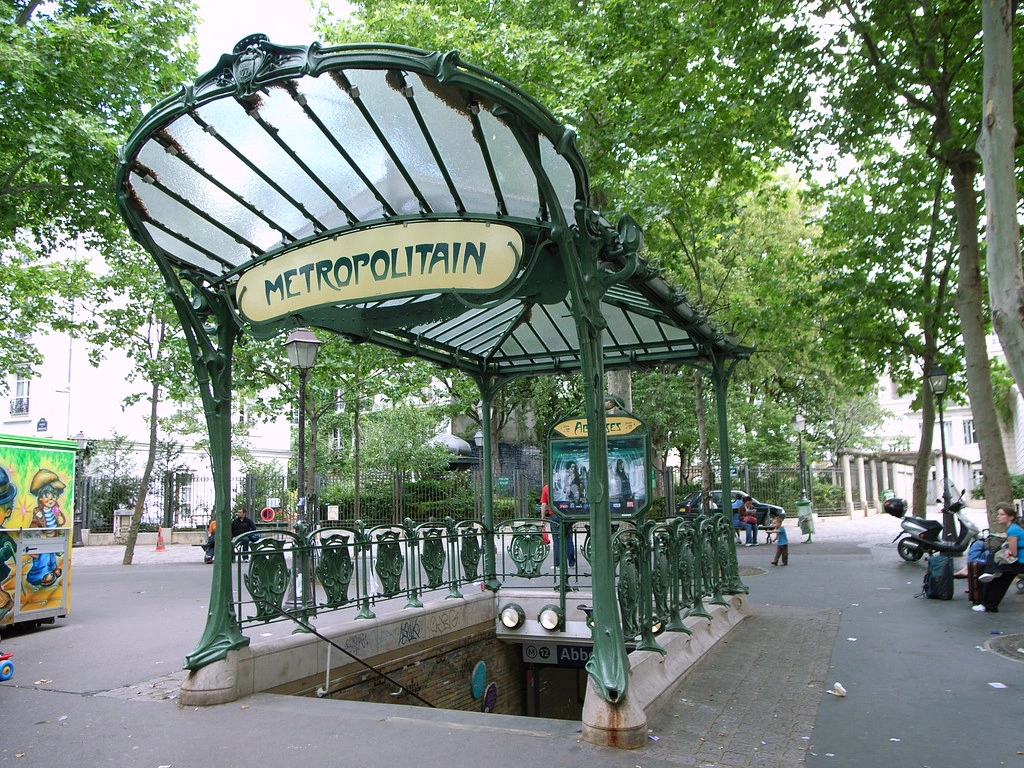
Architect: Hector Guimard
Location: Paris, France
Year built: 1912
Abbesses is one of the deepest metro stations in Paris, 118 feet below ground, and is appealing because of its Art Nouveau entrance designed by Hector Guimard, a French architect who was one of the founders of this movement. Hector’s architectural designs are famous for their shapes that take inspiration from the natural environment, and the Abbesses entrance is one of his exceptional and preserved examples, including a cast iron canopy (a typical element in Hector’s designs). The underground interior of the station includes wall murals that reflect the neighborhood and Montmartre’s richness in art and poetry.
Berlin U-Bahn
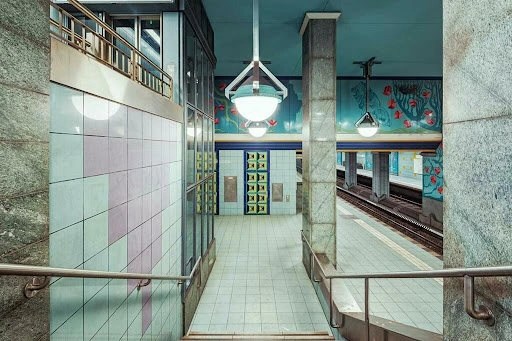
Architect: Alfred Grenander
Location: Berlin, Germany
Year built: 1902
The Berlin Underground Railway existed way before the World War, and long after, until today, the historical design of the train and the station itself is preserved, which makes being there feel like being in a museum showcasing Germany’s past. Swedish-born architect Alfred Grenander intended to design the station to be not only aesthetically appealing but also functional, easy to navigate, and practical for all. He used color-coded tiles to distinguish between different stations and focused on minimal design for clarity.
The Bauhaus movement had its own impact on most railway stations at the time, where simplicity became essential. Industrial materials like concrete, steel, and glass became heavily used, and there was no ornamentation, unlike classical designs. However, the U-Bahn station featured plenty of artwork throughout despite its minimal approach to design. This alone makes it a significant architectural experience for all.
Nowy Swiat-Uniwersytet Metro Station
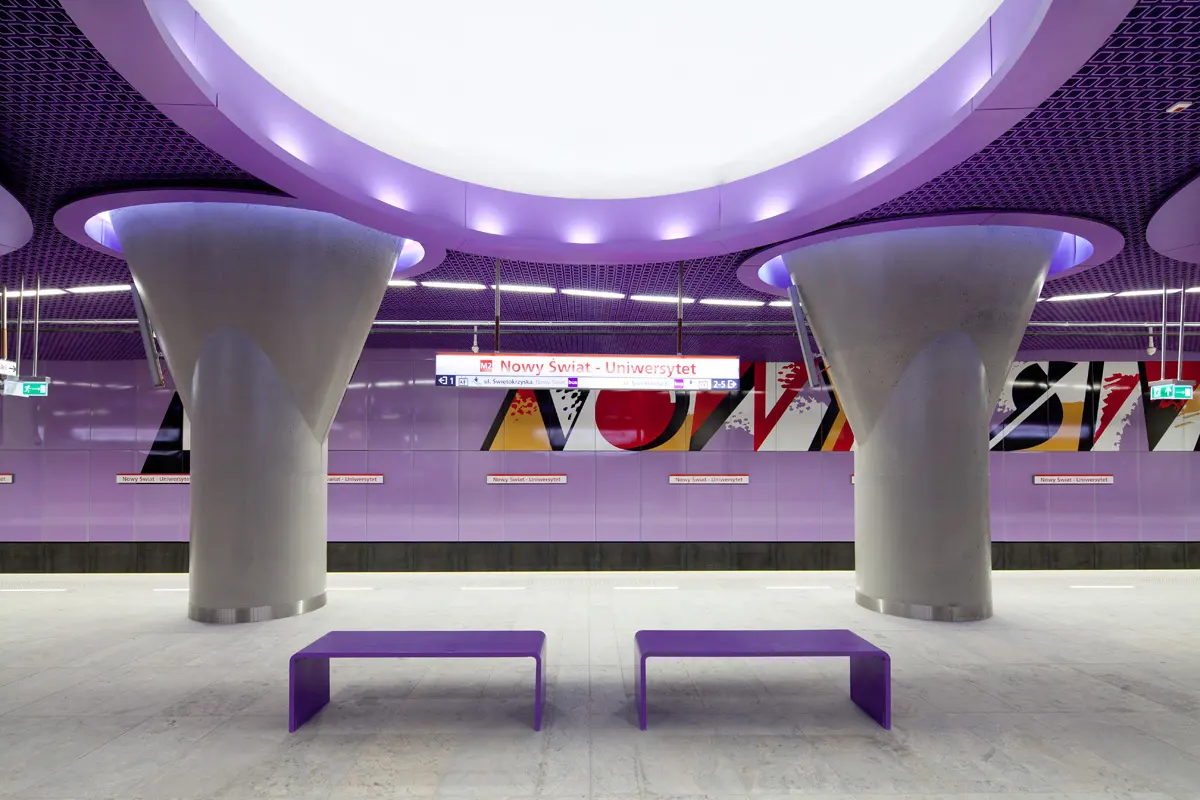
Architect: Andrzej M. Cho?dzy?ski
Location: Warsaw, Poland
Year built: 2015
An aircraft from outer space, but underground! This is how it feels to be in Warsaw’s coolest metro station, Nowy Swiat-Uniwersytet. The station was designed by Polish architect Andrzej M. Cho?dzy?ski, who focused on creating a minimal, functional, and bold futuristic design with its vibrant use of purple in a spaceship-like structure.
The area features mosaics by renowned artist Wojciech Fangor and modern materials and designs like black basalt, illuminated panels, and suspended ceilings. Most modern stations ensure people have a smooth and easy experience while enjoying the surrounding art and architecture which is proved in this exceptional station in Poland’s capital.
