

Before we delve into the ripple effect of placemaking in public spaces, let me note an interesting thought. In his enlightening lecture, “Everyday, Happiness, and the Sacred: Architectural Reflections”, Julio Bermudez delves into a peculiar observation of human existence. He likened individuals to flesh-bound robots governed by a system fixated solely on its own perpetuation.
Another important idea he added is that beneath the veneer of what we perceive as “ordinary” lies the extraordinary. We can draw a fundamental truth from Bermudez’s insights: our perception of the environment has a great impact on shaping it.
What does that mean? So if the city is conceived merely as a utilitarian hub for production and labor, it becomes a soulless metropolis of mechanized existence. However, when the fabric of the city is approached with sensitivity to human nature, it transforms into a tapestry of experiences that invite inhabitants to walk, work, and live with a sense of belonging.
That’s just a very sophisticated way to say that you actually believe something into existence – even the nature of a city. This is the core of what we now know as Placemaking, and this article will shed a light on the importance of Placemaking in public spaces.
Origins of Placemaking with William Whyte

At the heart of any city lies its public spaces, the pulse points where communities converge and identities intertwine. These spaces cease to be mere functional entities; rather, they evolve into vibrant landscapes imbued with the memories and emotions of those who inhabit them. William H. Whyte, an esteemed American urbanist and journalist, was among the firsts who recognized this fundamental shift in perspective.
Fun fact, he was the mentor of Jane Jacobs who advocated for the right of the citizens in a healthy public space. Through meticulous observation and an unwavering commitment to capturing the essence of urban life, Whyte highlighted the delicate interactions of human behavior within public domains. What emerged through his intuitive analysis is an extremely human, often amusing view of what is staggeringly obvious, but often goes unnoticed, about people’s behavior in public spaces.
Whyte notes that “Cities have the capability of providing something for everybody, only because, and only when, they are created by everybody“. His groundbreaking “Street Life Project,” spanning over 16 years of street-level observation, laid bare the nuances of pedestrian dynamics and community interaction.
Whyte’s seminal work culminated in the publication of “City: Rediscovering the Center” in 1988, a testament to his pioneering exploration of urban vitality and human connectivity. By challenging conventional wisdom and advocating for a holistic understanding of public spaces, Whyte paved the way for a paradigm shift in urban design, that was later called Placemaking.
What Is Placemaking?
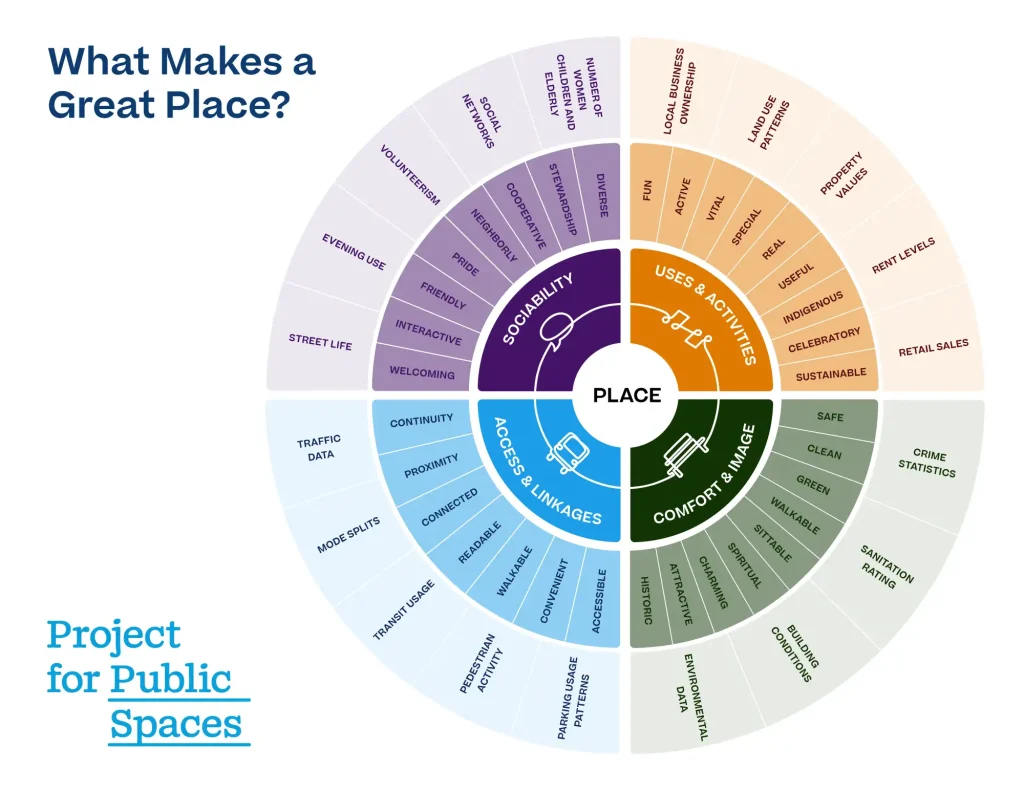
The emergence of the Placemaking movement, spearheaded by Steve Davies and Fred Kent, marked a pivotal moment in the evolution of urban planning. Inspired by Whyte’s human-centric ethos, Kent founded the Project for Public Spaces (PPS) in 1975, with a mission to reclaim public domains as communal assets. Placemaking, as articulated by PPS, transcends the realm of physical infrastructure; it embodies a philosophy of community empowerment and collective stewardship. By engaging stakeholders in a collaborative dialogue and fostering grassroots initiatives, placemaking fosters a sense of ownership and pride in shared spaces.
Great public spaces are defined not by their physical attributes alone, but by their ability to nurture social cohesion and individual well-being. As PPS advocates, the essence of placemaking lies in its inclusivity and adaptability, transcending socio-economic barriers to embrace diversity and creativity. By prioritizing community engagement and fostering a culture of collaboration, placemaking empowers individuals to shape their environments in alignment with their aspirations and values.
The core principles of placemaking – community-driven, adaptable, and visionary – serve as a guiding light for designers and planners seeking to create spaces that resonate with the human spirit. They even have a very inspiring and thought-provoking motto to sum it all up : What if We Built Our Cities Around Places?
The Impact of Placemaking In Public Spaces
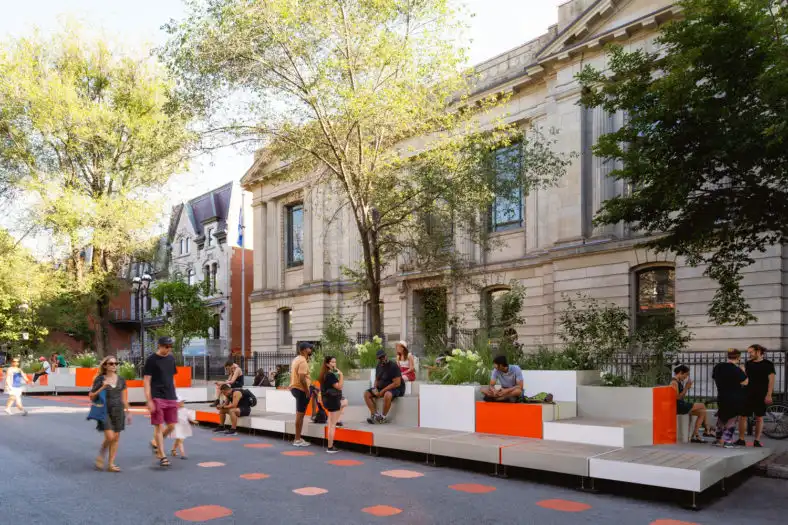
Placemaking proves itself to be a tool to help designers and planners bow down to the humble eyes of the general public. William Whyte changed the way we perceive urban space, for he made us aware of the power of observation. Humans are already complex and interesting in their public interactions, all it took to realize it was Whyte to sit down with his camera and documentative notes. Whyte had an unraveled hope in the change of a certain system, and I think that he succeeded in the way that placemaking was born out of his efforts.
“We are not hapless beings caught in the grip of forces we can do little about, and wholesale damnations of our society only lend a further mystique to organization. Organization has been made by man; it can be changed by man.” – William Whyte
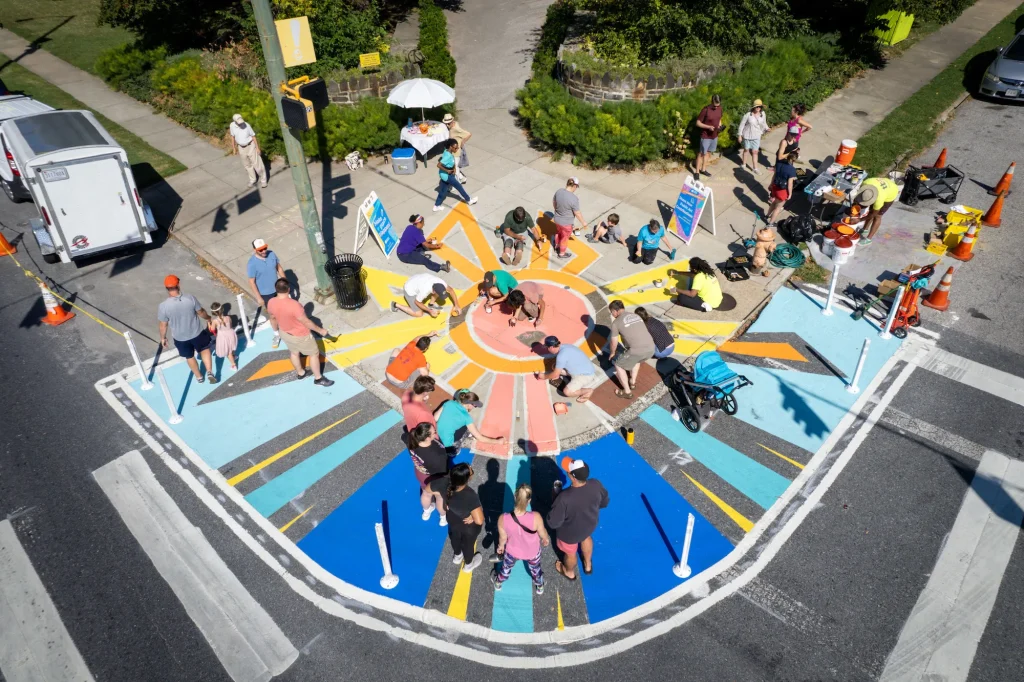
Seemingly small gestures have a power that can ripple out like a butterfly effect. A single act of painting a street wall yellow or planting flowers near the curbs has the potential to uplift an individual’s mindset. This positivity resonates outward and shapes the atmosphere of the spaces citizens inhabit. Placemaking teaches us that no public space, no matter how modest or inconspicuous, should be underestimated. A city’s success hinges upon a thorough comprehension of the intricate psychological and physiological needs of its inhabitants. Jan Gehl once rightfully said, “First life, then spaces, then buildings – the other way around never works”.
