



The Gothic architectural style is one of the most easily identifiable and undoubtedly one of the most important in Western art and architecture history. It reached its height in Europe during the High and Late Middle Ages, spanning the 12th to 16th centuries.
Gothic architecture is renowned for its grandeur, elaborate detailing, and skillful blending of form and proportion. It reflects the social, religious, and cultural life of medieval Europe. Evolving from Romanesque architecture, Gothic architecture marked a transition before the emergence of the Renaissance, showcasing distinctive shifts in medieval society’s structure and mentality.
The Evolution from Romanesque to Gothic

Gothic architecture evolved from the Romanesque period, which dominated European architectural development in the 10th and early 12th centuries. Romanesque architecture was characterized by features such as small windows, rounded arches, thick walls, and a sense of mass and solidity. For example, the Abbey Church of Sainte-Foy in Conques, France, emphasizes the firmness of its structure and the gravity of divine power.
By the High Middle Ages, there was a growing demand for complex, vertical patterns reflecting the intellectual and spiritual aspirations of the time. The old Church of Saint-Denis, constructed in the mid-12th century under the guidance of French abbot Suger, is regarded as the birthplace of Gothic architecture in France. Suger introduced concepts of a “heavenly Jerusalem,” encouraging architectural creativity, such as the notion of weightlessness and creating buildings that felt light and open. From the massive, grounded Romanesque structures evolved the tall, slender Gothic buildings, designed to symbolize spiritual progress. This shift marked the beginning of the Gothic style, which became the hallmark of church architecture in Western Europe.
Notre-Dame de Paris, France

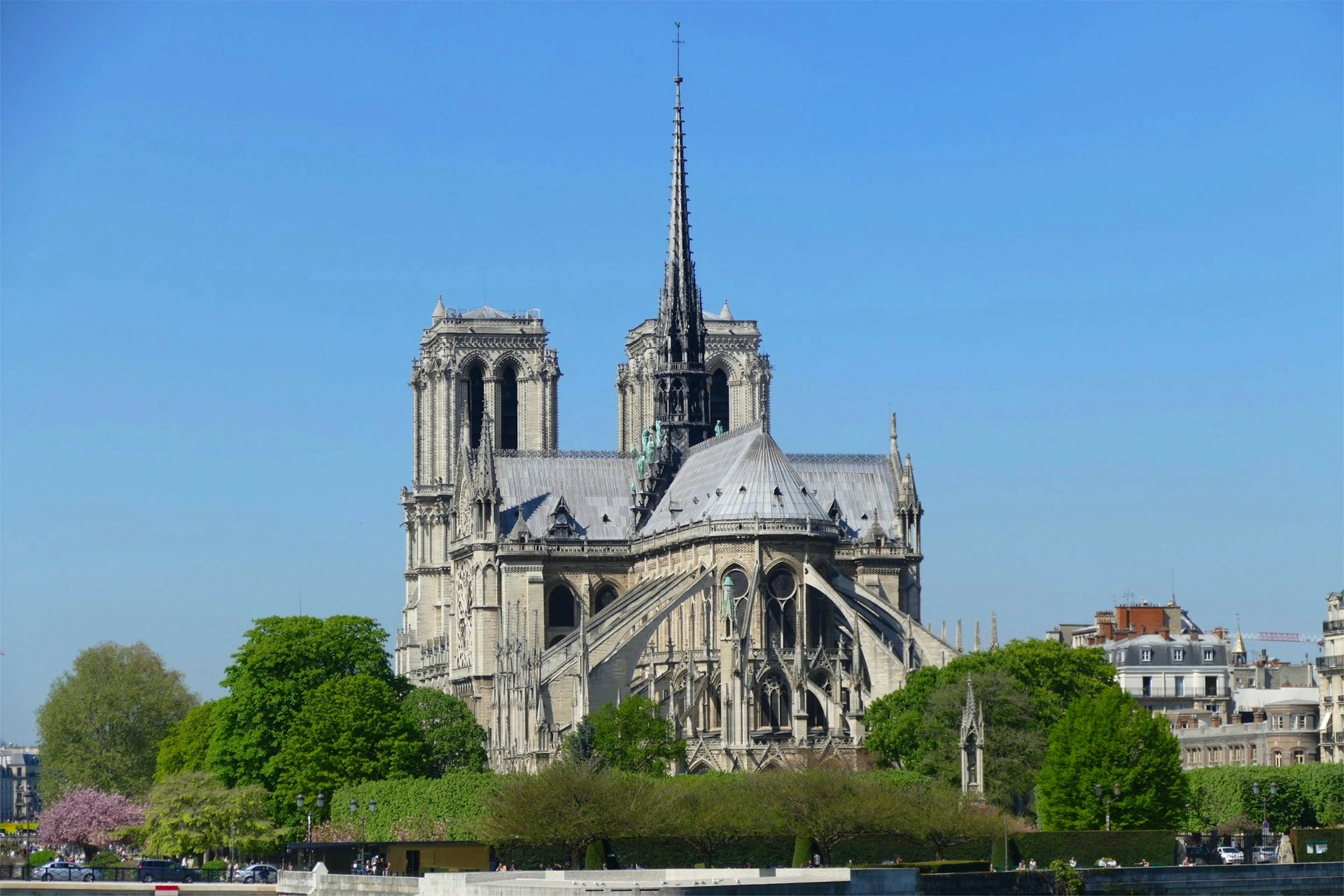
Notre Dame de Paris, one of the most famous Gothic churches in the world, is a prime example of a Gothic attraction. Construction began sometime between 1163 and 1366, taking nearly two centuries to complete. Notre-Dame showcases the innovative use of structures in Gothic architecture to produce taller, brighter interiors.
The cathedral’s verticality is enhanced by the pointed arches used in its construction. The architects successfully lightened the nave by raising the ceiling with ribbed vaults. The flying buttresses, added in the 13th century, are perhaps its most iconic feature. These external supports allowed for larger rose windows, enormous gates, and thinner walls, making the interior brighter and more spacious.
The elaborate Gothic style is further reflected in Notre-Dame’s façade, adorned with sculpted reliefs, gargoyles, and decorative embellishments. The cathedral’s famous 69-meter (226-foot) towers add to its majesty. Despite the damage caused by the 2019 fire, Notre-Dame remains a symbol of Gothic strength, and restoration efforts continue to preserve its architectural heritage.
Chartres Cathedral, France
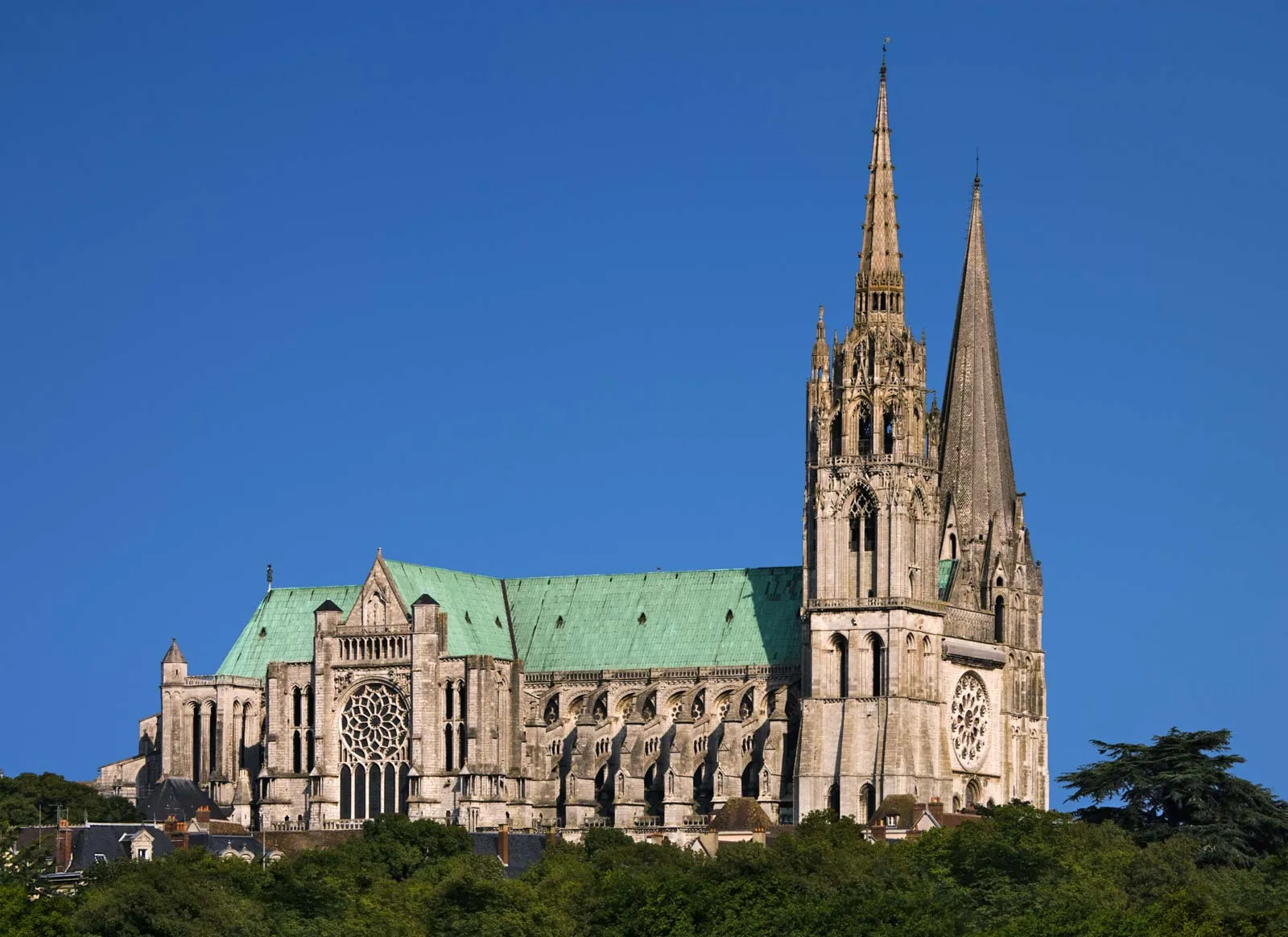
Located southwest of Paris, the Chartres Cathedral is considered one of the finest examples of High Gothic architecture. After the previous structure was destroyed by fire in 1194, Chartres was rebuilt, gaining renown for its sophisticated design and innovative Gothic features. The cathedral’s massive stained-glass windows, which cover nearly every wall, create a stunning display of light and color inside. One of the most famous is the rose window on the west façade, a masterpiece of Gothic stained glass artistry.
Chartres was also a pioneer in the use of flying buttresses, enabling thinner walls and taller ceilings. The pointed arches and ribbed vaults further emphasize the cathedral’s verticality, drawing the viewer’s gaze toward the heavens. Its twin spires, with the taller one reflecting stylistic evolution, are another distinctive feature of the cathedral’s design.
Gothic architecture’s innovation in structure and ornamentation continues to inspire designers today. Explore how computational tools can revolutionize design at PAACADEMY workshops.
Milan Cathedral, Italy

Milan Cathedral, one of the largest Gothic cathedrals in the world, exemplifies Italian Gothic design. Construction began in 1386, but it was not completed until the mid-20th century. The cathedral’s unique architectural style results from a blend of Italian craftsmanship with Gothic and Renaissance elements. The most distinctive feature is its multitude of spires, adorned with intricate sculptures and carvings, giving the structure a characteristic verticality.
The cathedral’s flying buttresses not only support the massive roof but also enhance its dramatic and highly ornamental exterior. The façade, with its numerous sculptures and detailed stonework, is a testament to the Gothic emphasis on decoration. Despite its vast size, the combination of pointed arches, ribbed vaults, and large windows creates a sense of lightness and spaciousness within.
Sainte-Chapelle, France

Located in the heart of Paris, Sainte-Chapelle is renowned for its soaring design and exquisite use of stained glass. Built as a royal chapel to house Christian relics such as the Crown of Thorns, it is a prime example of the Rayonnant style of Gothic architecture, which emphasizes height, light, and elaborate detailing.
The chapel’s interior is dominated by large stained-glass windows that cover almost the entire upper walls. These 15 windows, each rising 15 meters (50 feet), depict biblical stories in stunning color. The result is a space bathed in colored light, creating a mystical and spiritual atmosphere.
Sainte-Chapelle’s ribbed vaults, supported by slender columns, further emphasize verticality, while the thin stone mullions supporting the stained glass allow for translucent walls. This lightness is a hallmark of Gothic architectural innovation.
Cologne Cathedral, Germany

Cologne Cathedral in Germany, one of the tallest Gothic buildings in the world, is a masterpiece of Gothic design. Construction began in 1248 and continued until 1880, making it one of the longest construction projects in Gothic history. Despite this long timeline, the cathedral retains stylistic coherence and is a major example of Gothic architecture.
The interior features a nave with soaring ribbed vaults supported by flying buttresses that allow for great heights and large stained-glass windows. These windows, added in the early 20th century, enhance the cathedral’s spiritual and noble atmosphere.
Key Features of Gothic Architecture
Pointed Arches: Gothic architecture is most known for its pointed arches, which took the place of the rounded Romanesque arches. Because it could be adjusted to different widths and heights, the pointed arch gave designers more creative freedom. Additionally, this feature more effectively dispersed weight, allowing architects to design larger, more expansive structures. As a representation of an upward march toward the skies, the pointed arch came to define the Gothic style.
Ribbed Vaults: Another important advancement in Gothic architecture was ribbed vaulting. Barrel vaults, or long, semi-circular arches, were employed to support the roof in early Romanesque buildings, but they needed massive walls to hold the weight. Ribbed vaults, on the other hand, sustained a more evenly distributed load using thin columns and piers as opposed to thick walls. This allowed for the construction of interiors that are higher and more light-filled, as well as open and spacious.
Flying Buttresses: The flying buttress is one of the most recognizable engineering marvels of Gothic architecture. Instead of depending on substantial walls for support, the architects were able to shift the weight of the roof and top walls to an external pier thanks to these external supports. Large stained-glass windows that allowed for elaborate decorative features and allowed light to enter the interior were made possible as a result. The most well-known examples of flying buttresses are found in cathedrals such as Notre-Dame in Paris and Chartres Cathedral, where they add to the dramatic, skeleton look of the building.

Verticality and Light: Gothic cathedrals are famous for their loftiness and focus on illumination. The yearning for heaven was symbolized by the verticality of Gothic architecture, which was attained by pointed arches, ribbed vaults, and flying buttresses. The interior was illuminated by huge stained-glass windows, which created an ethereal ambiance intended to invoke the divine presence. Because the light was associated with God’s grace in medieval Christian belief, the play of light through the stained glass was meant to evoke awe and reverence in the faithful.
Ornamentation and Sculptural Detail: Gothic architecture is also famous because of statues or other decorations on the cathedrals’ facades and doors, as well as the interior, including reliefs and other decorative elements. Bible stories and religious tutorials were depicted by carvings of saints, bible scenes, and allegorical characters as most of the people were illiterate; grotesques, gargoyles, and other motives where art functions as both ornament and drainage. The Last Judgement is more often depicted above the portal of Gothic churches as the sign to the pious people of their afterlife. These elaborate frontispieces were meant to tell the story of salvation.

Rose Windows: Another major decorative feature is the rose window, which is a circular window that is usually located at the west end of the nave or of the transepts and is filled with stained glass. Rose windows were beautiful geometric artwork that reflected the orderliness of creation through their cycles of tracery and expressive hues. The rose window was depicted in a rather generic theme, which included, all too often, sacred scenes containing references to the Bible, to saints’ lives, or to figures that symbolized the concepts of Christianity.
The exquisite moldings, the orchestrations of the motifs on ceilings and stuccos, its vertical orientation, and the admission of light could also be deemed a reflection of the period’s values, both in terms of enlightenment and spirituality. Besides, the engineering acquired that contributed to the Gothic architecture included the flying buttresses, ribbed vaults, and pointed arches, which enabled architects to design beautiful structures that were also structurally complex.
