
Close Menu
ParametricParametric

    Subscribe to Updates

    Get the latest creative news from FooBar about art, design and business.

    What's Hot

    tetsstststtt

    July 23, 2026

    Soundscape in Architecture: Designing Through Sound

    July 23, 2026

    MVRDV Wins Shift Embassy Competition with Rotterdam ROCKS!

    July 23, 2026
    Facebook X (Twitter) Instagram
    Facebook X (Twitter) Instagram Pinterest YouTube LinkedIn TikTok
    ParametricParametric
    Courses
    • Articles
      • Archipreneurs
      • Technology
      • BIM / AEC
      • 3D Printing
      • Architects
      • Artificial Intelligence
      • Robotics
      • Sustainability
      • Tools
      • Case Study
      • City Guide
      • Opinions
      • Interviews
      • Architecture & Design
        • Urbanism
        • Metaverse
        • Space Architecture
        • Geography
    • Projects
      • Architecture
      • Interior
      • Design
        • Fashion
        • Pavilion
        • Installation
        • Digital Art
        • Landscape Design
      • Products
    • Workshops
    • Ads
    • Architecture News
    • Digital Members
    • Books
    • CDNext
    • CDNEXT Recordings
    • Competitions
    • Events
    • PA Talks
    • Jobs
    • landscape
    • Landscape Architecture
    • PA Quotes
    • PAACADEMY
    • podcasts
    • memorial
    • Studio Recordings
    • Studio Workshops
    • Uncategorized
    • Videos
    ParametricParametric
    Home»Architecture News»NASA uses AI to design mission hardware that “looks somewhat alien and weird”
    Architecture News

    NASA uses AI to design mission hardware that “looks somewhat alien and weird”

    adminparametBy adminparametJuly 23, 202604 Mins Read0 Views
    Facebook Twitter Pinterest LinkedIn Tumblr WhatsApp Reddit Email
    Share
    Facebook Twitter LinkedIn Pinterest Email
    NASA
    © Photo by Henry Dennis via NASA

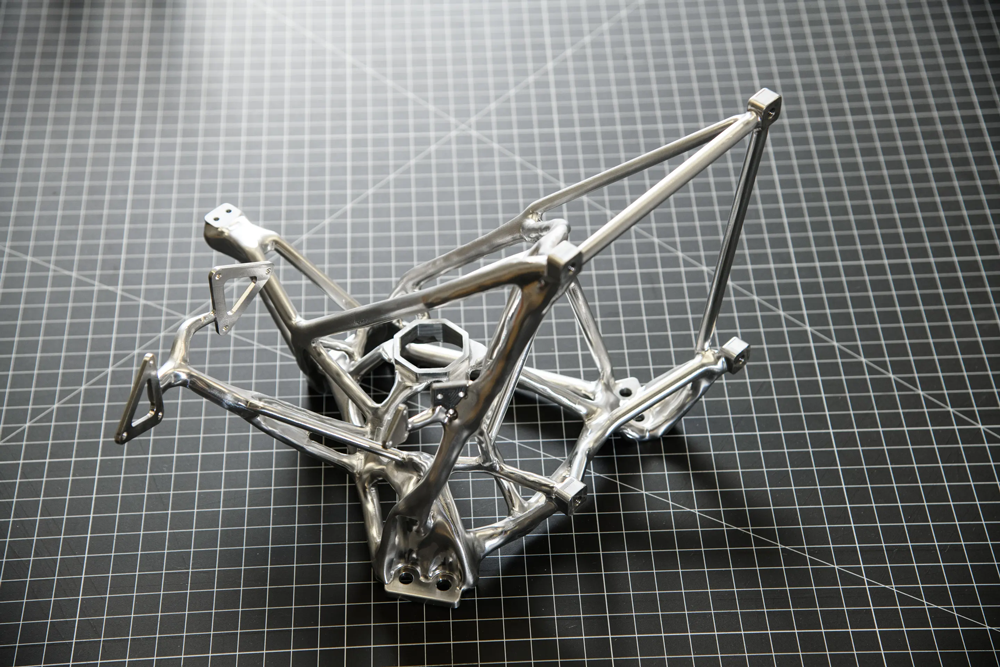
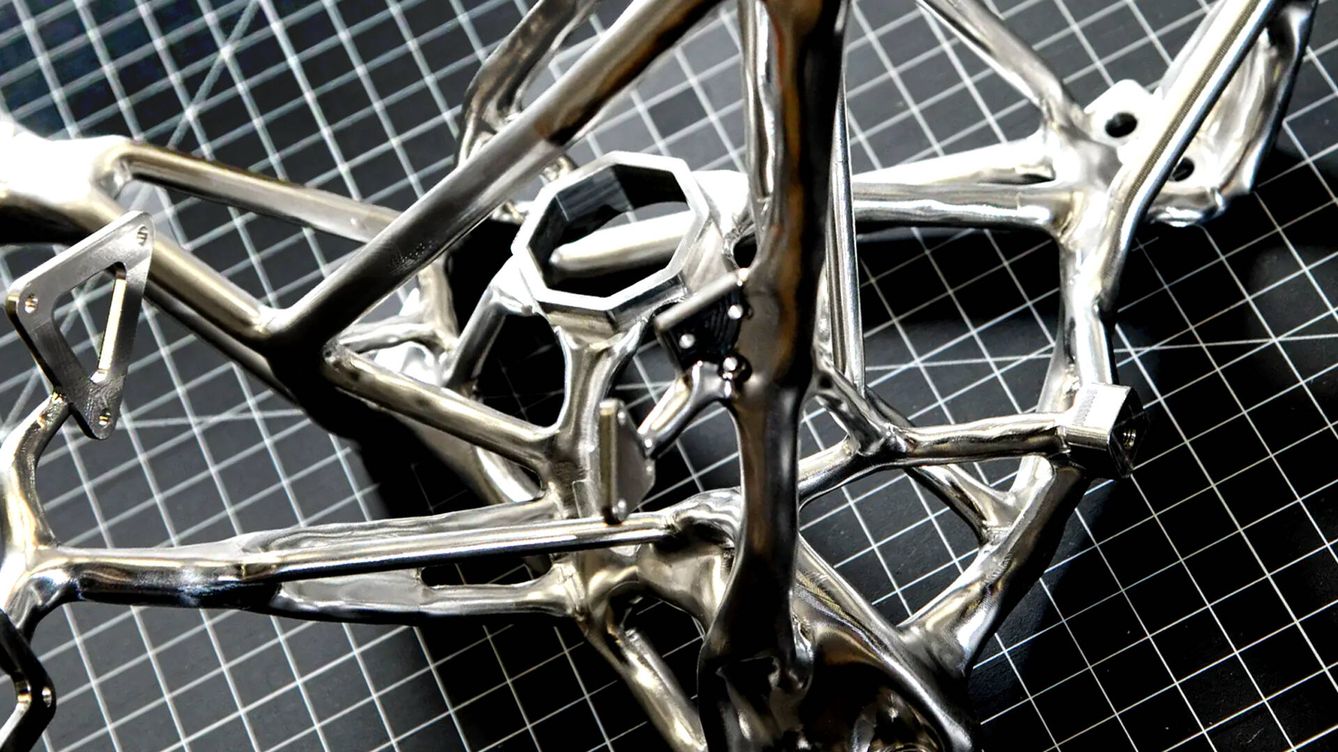
    NASA has created Evolved Structures, a novel approach that uses artificial intelligence (AI) to construct metal brackets and mounts for its space exploration missions. The system’s generative algorithm produces designs that are much stronger than human-designed counterparts while saving up to two-thirds of the weight. Evolved Structures have been utilized to create everything from scaffolds to optical benches, the latter with “nearly bone-like” organic structures that can withstand higher structural pressures than human-made parts.

    “They look somewhat alien and weird,” Research Engineer Ryan McClelland said, “but once you see them in function, it really makes sense.”

    The system relies on human input in the form of a precise brief, detailing the requirements for the part, including the load it has to carry and what forces it will be exposed to. This data is fed into the generative design software, which is able to produce 30 to 40 iterations in a few hours, each improving on the last to evolve an optimal structure.

    NASA
    © Photo by Henry Dennis via NASA

    The final design can be fed straight into a digital manufacturing process and machined by a standard computer numerical control (CNC) mill based on the computer-aided design (CAD) model. From design to production, this process can take as little as one week. The traditional process involves passing the design around between a designer, a stress analyst, and a machinist, which can take months or years depending on the project.

    AI connects the dots, McClelland said but producing complex structure designs in as little as an hour or two. “The algorithms do need a human eye,” he said. “Human intuition knows what looks right, but left to itself, the algorithm can sometimes make structures too thin.”

    According to Dezeen, NASA research engineer Ryan McClelland estimates that the Evolved Structures process is around ten times faster than NASA’s normal process. He predicts that the design process will become common practice when designing structural parts, electronics, and other subsystems within NASA’s instruments and spacecraft, helping to reduce both the time and cost associated with space exploration. “I really think AI has the potential to drastically lower the cost of developing these complex systems because it’s really great at these sorts of things,” he said.
    © Photo by Henry Dennis via NASA

    NASA missions at various phases of design and construction have used McClelland’s evolving components, including astrophysics balloon observatories, Earth-atmosphere scanners, planetary sensors, space weather monitors, space telescopes, and even the Mars Sample Return mission.

    Peter Nagler, a Goddard physicist, used evolved structures to aid in the development of the EXoplanet Climate Infrared TElescope (EXCITE) project, a balloon-borne telescope designed to study hot Jupiter-type exoplanets orbiting other stars. EXCITE, which is currently being built and tested, intends to use a near-infrared spectrograph to make continuous studies of each planet’s orbit around its home star.

    “We have a couple of areas with very tricky design requirements,” Nagler said. “There were combinations of specific interfaces and exacting load specifications that were proving to be a challenge for our designers.”

    McClelland created a titanium scaffold for the back of the EXCITE telescope, which connects the IR receiver, which is housed inside an aluminum cryogenic chamber, to a carbon fiber plate that supports the primary mirror. “The thermal expansion properties of these materials are significantly different,” Nagler explained. “We needed an interface that wouldn’t stress either material.”

    The EXCITE mission’s SUV-sized payload will be launched by a NASA Super-Pressure Balloon, with an engineering test flight scheduled for the fall of 2023.

    McClelland believes that 3D printing with resins and metals will pave the way for larger components such as structural trusses, complicated systems that move or unfold, and advanced precision optics. “These techniques could enable NASA and commercial partners to build larger components in orbit that would not otherwise fit in a standard launch vehicle, they could even facilitate construction on the Moon or Mars using materials found in those locations.”

    3d printing artificial intelligence GEN NASA TElescope
    Share. Facebook Twitter Pinterest LinkedIn Tumblr Email
    adminparamet
    • Website

    Related Posts

    This Robotic Clothing Wraps Around You in Just 10 Seconds

    July 23, 2026

    Where Did the Women Go? The Hidden Disappearance of Female Architects After Graduation

    July 23, 2026

    Morandi Bridge Collapse Ex-CEO Sentenced to 12 Years

    July 23, 2026
    Add A Comment
    Leave A Reply Cancel Reply

    Demo
    Top Posts

    Design Reviews Are Moving Beyond Still Images and Animations. D5 3.1 Shows What’s Next.

    July 23, 20268 Views

    tetsstststtt

    July 23, 20264 Views

    World Architecture Festival Unveils 2026 Shortlist Featuring 416 Projects Worldwide

    July 23, 20264 Views

    15 Picturesque Neighborhoods Around the World Every Design Lover Should Visit

    July 23, 20263 Views
    Don't Miss

    tetsstststtt

    By adminparametJuly 23, 2026

    Soundscape in Architecture: Designing Through Sound

    July 23, 2026

    MVRDV Wins Shift Embassy Competition with Rotterdam ROCKS!

    July 23, 2026

    Shanghai’s Pollinator Machine Installation Brings Ancient Evolution to Life

    July 23, 2026
    Stay In Touch
    • Facebook
    • Twitter
    • Pinterest
    • Instagram
    • YouTube
    • Vimeo

    Subscribe to Updates

    Get the latest creative news from SmartMag about art & design.

    Demo
    About Us
    About Us

    Your source for the lifestyle news. This demo is crafted specifically to exhibit the use of the theme as a lifestyle site. Visit our main page for more demos.

    We're accepting new partnerships right now.

    Email Us: [email protected]
    Contact: +1-320-0123-451

    Our Picks

    tetsstststtt

    July 23, 2026

    Soundscape in Architecture: Designing Through Sound

    July 23, 2026

    MVRDV Wins Shift Embassy Competition with Rotterdam ROCKS!

    July 23, 2026
    Most Popular

    Design Reviews Are Moving Beyond Still Images and Animations. D5 3.1 Shows What’s Next.

    July 23, 20268 Views

    tetsstststtt

    July 23, 20264 Views

    World Architecture Festival Unveils 2026 Shortlist Featuring 416 Projects Worldwide

    July 23, 20264 Views
    Facebook X (Twitter) Instagram Pinterest YouTube LinkedIn TikTok
    • Home
    • Buy Now
    © 2026 ParametricArchitecture. All Rights Reserved. By utilizing this website, you are consenting to our User Agreement, Privacy Policy, and Cookie Statement. In compliance with the privacy laws of Turkey and the United States, we recognize and respect your rights. Please be aware that we may receive commissions for products bought through our affiliate links. Unauthorized reproduction, distribution, or transmission of any material from this site is strictly forbidden without prior written permission from ParametricArchitecture.

    Type above and press Enter to search. Press Esc to cancel.

    Sign In or Register

    Welcome Back!

    Login to your account below.

    Lost password?