


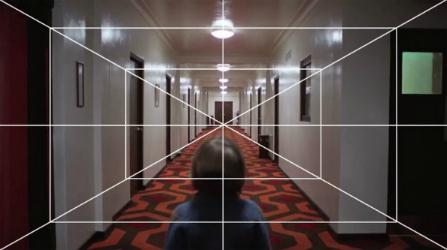
The Shining, directed by Stanley Kubrick, is a masterpiece of tension and suspense that owes much of its impact to the detailed fiction of space sensation that Kubrick creates through spatial designs. Let’s take a look.
During the making of a movie, the places where the events occur are always carefully considered. While setting up a plot outside of real life, various freedoms can come into play in the design of the spaces constructed based on these events. The everydayness of events pushes the spaces that exist in reality, but sometimes we find ourselves in completely different places for unreal events with which we can connect at one point. Sometimes, while we watch the events in the movie, spatial arrangements direct our feelings without us noticing. Spatialities in Stanley Kubrick’s films always attract attention. He has been the subject of many studies with his detailed thoughts on space designs and what he wanted to express and reflect on.
Many people know Kubrick, one of the contemporary filmmakers, and one of his most famous works, The Shining. The Overlook Hotel, where this film is considered a masterpiece of tension and suspense, takes place, has an architecture that raises many questions and makes you think. This article aims to draw attention to the spatial designs that bring that uneasiness you feel while watching the movie and to re-look from the context of spatiality.
The Shining
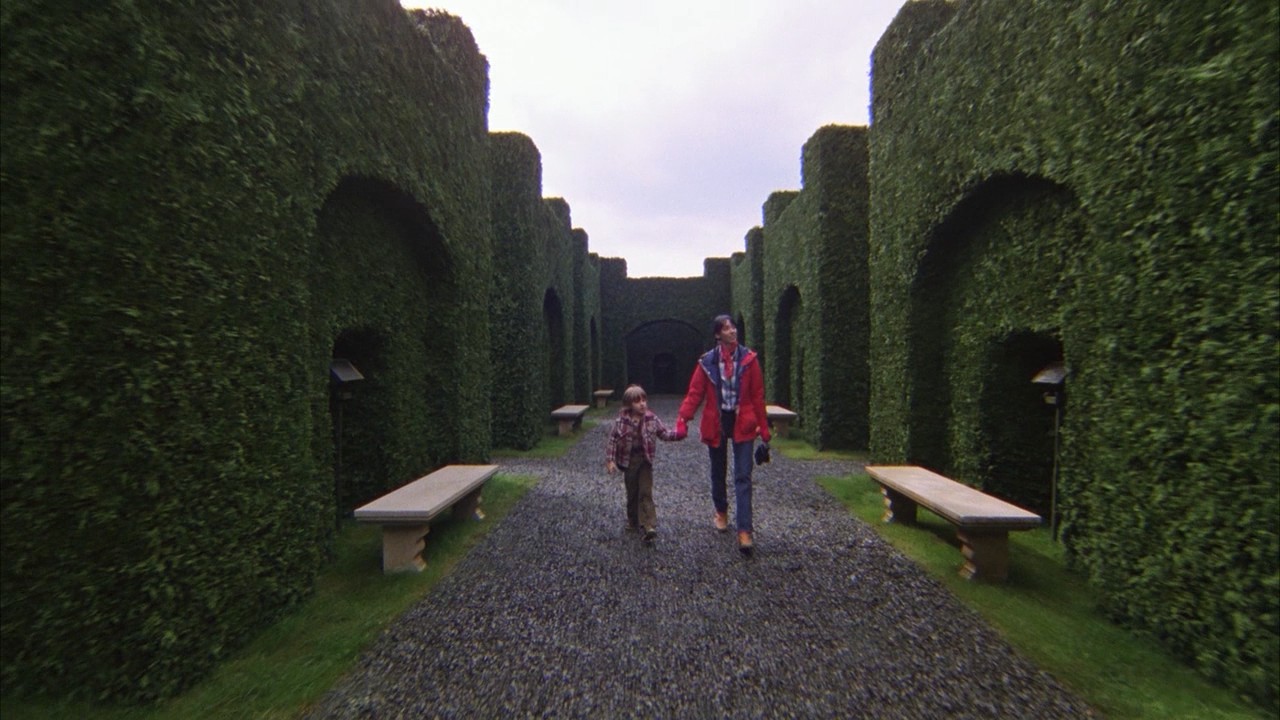
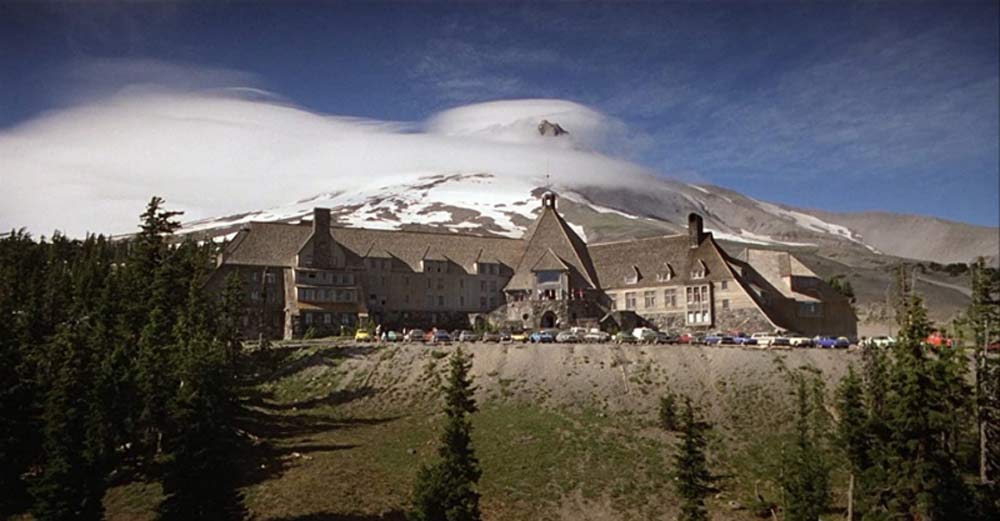
Jack Torrance (Jack Nicholson) is actually a writer but takes a job as a winter watchman at The Overlook Hotel to earn money. His main goal is to see the empty hotel as a retreat and to work on his writings. Even at the very beginning of the movie, the location of the Overlook hotel gives us a distant and desolate image. In the movie, which begins with the life of Jack and his family in the hotel, the feeling of uneasiness begins to dominate with the tense story told by the employee who was showing the hotel at the beginning. As the months pass, we see that Jack has not been able to progress in his writing and is slowly starting to go crazy. In the story, in which the Overlook hotel has its memory and makes the people feel it, we see that Jack sees various visions about the hotel’s past and the problems in his own life, and is approaching insanity. The detailed fiction of space sensation is undeniable in the uneasy feeling while watching this tense story.
Let’s take a look at The Overlook Hotel’s labyrinthine layout, the unsettling effect of the ambiguous space, and the image designs Kubrick created for the feel he was aiming for.
The Overlook Hotel
“We wanted the hotel to look authentic rather than like a traditionally spooky movie hotel. The hotel’s labyrinthine layout and huge rooms, I believed, would alone provide an eerie enough atmosphere.”
Stanley Kubrick
The place that comes to mind when it comes to suspense movies and hotels: the Overlook Hotel. The hotel’s high ceilings, large rooms, floor-to-ceiling window openings, and spatial spaces we see throughout the film make the characters look small and lonely. In addition, when we associate these huge indoor spaces with the exterior, we realize that there are inconsistencies.
We first encounter the maze-like design of the hotel on the stage where the family is shown around the hotel. In the scenes followed by the camera, we encounter different walls at every turn and spatial arrangement in each room that is too big to fit in that corridor. This situation may not have been noticed when watching the movie for the first time, but the feeling of following them and often entering complex spaces manages to take us inside from the beginning of the movie.
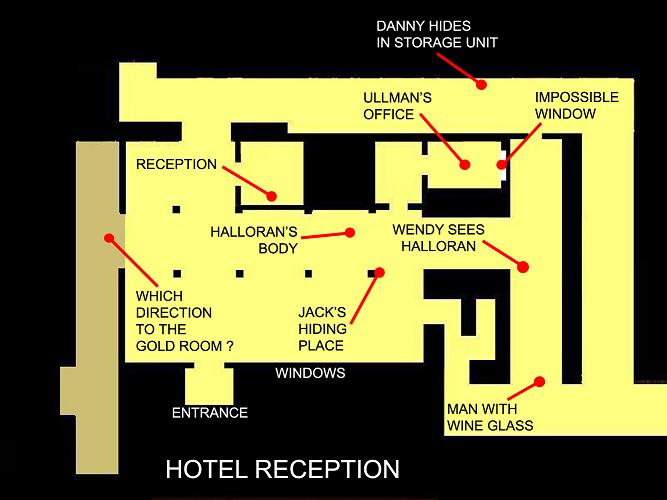
Film critic and analyst Rob Ager has produced a detailed study for The Shining. In this study, scene by scene, all the spaces and inconsistencies between their locations are explained through plan diagrams. Based on interviews and comments about the film, he says these inconsistencies are not overlooked, but deliberately constructed to express a sense of ambiguity under Kubrick’s control.
As you watch the movie in this maze-like hotel, the dominance that is expected to allow spatial estimation cannot be achieved. Unexpected spaces, window openings, long corridors, and doors that are arranged in irrational numbers and shapes in these corridors do not allow the comfort of certainty, keeping the viewer alert at all times.
The uneasiness
Rob Ager’s detailed spatial analysis work brings a different perspective to the film. All of the details in this study may not have been noticed by most of us while watching the movie for the first time. However, when viewed from this point of view, it is impossible not to appreciate Kubrick’s detailed work and the feelings these spatial ambiguities create without being noticed.
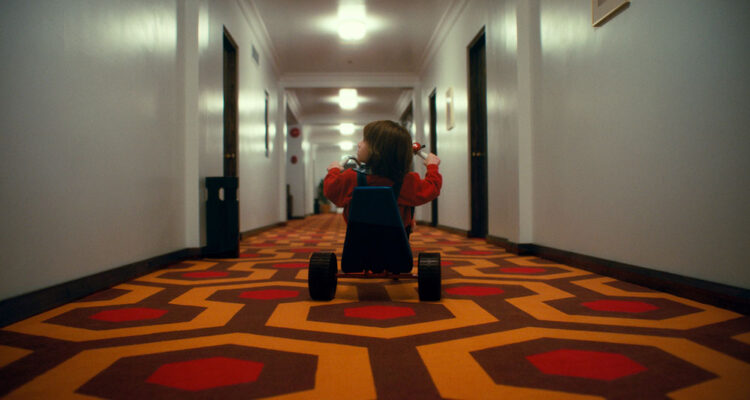
Perhaps one of the tensest scenes of the movie; is Danny and his tricycle tour. In this scene, we see Danny taking a tour of the hotel corridors. We follow Danny as he takes his fast lap at the hotel, and in this process, we watch with an uneasiness that we don’t know what to expect at each turn. Watching Danny from a trailing camera perspective, both the feeling of being chased and the spatial symmetry and labyrinthine tour trigger an uneasy feeling.
The symmetry used in the scenes is one of the important factors for the feeling of uneasiness in such films. When we look at it from this perspective, we see that symmetry and mirroring are used quite a lot in The Shining.

The symmetrical shots, the patterns on the carpets and walls, and the feeling of always being in danger and alert, such as the centering of Danny in the shots, make us realize that the Shining has very detailed visual subtitles. And that iconic scene; Meeting the Grady twins on Danny’s tense tricycle ride. In addition to our sudden encounter with them in this scene, the symmetrical and central appearance of the twin girls in the venue increases the tension of the movie. From beginning to end, the careful work of Kubrick and the set designers and the design of the relationship between plot and spatiality make The Shining one of the best thrillers.
Spatial sensations are among the common study points of architecture and cinema. The Shining is one of the important examples that convey the feeling of tension and uneasiness with its place design and cinematography. Detailed studies and discussions of the film in this sense are available in many areas from critics to architectural theses.
