

Close Menu
ParametricParametric

    Subscribe to Updates

    Get the latest creative news from FooBar about art, design and business.

    What's Hot

    tetsstststtt

    July 23, 2026

    Soundscape in Architecture: Designing Through Sound

    July 23, 2026

    MVRDV Wins Shift Embassy Competition with Rotterdam ROCKS!

    July 23, 2026
    Facebook X (Twitter) Instagram
    Facebook X (Twitter) Instagram Pinterest YouTube LinkedIn TikTok
    ParametricParametric
    Courses
    • Articles
      • Archipreneurs
      • Technology
      • BIM / AEC
      • 3D Printing
      • Architects
      • Artificial Intelligence
      • Robotics
      • Sustainability
      • Tools
      • Case Study
      • City Guide
      • Opinions
      • Interviews
      • Architecture & Design
        • Urbanism
        • Metaverse
        • Space Architecture
        • Geography
    • Projects
      • Architecture
      • Interior
      • Design
        • Fashion
        • Pavilion
        • Installation
        • Digital Art
        • Landscape Design
      • Products
    • Workshops
    • Ads
    • Architecture News
    • Digital Members
    • Books
    • CDNext
    • CDNEXT Recordings
    • Competitions
    • Events
    • PA Talks
    • Jobs
    • landscape
    • Landscape Architecture
    • PA Quotes
    • PAACADEMY
    • podcasts
    • memorial
    • Studio Recordings
    • Studio Workshops
    • Uncategorized
    • Videos
    ParametricParametric
    Home»Architecture News»Scientists map the giant bubble that surrounds our solar system
    Architecture News

    Scientists map the giant bubble that surrounds our solar system

    adminparametBy adminparametJuly 23, 202603 Mins Read0 Views
    Facebook Twitter Pinterest LinkedIn Tumblr WhatsApp Reddit Email
    Share
    Facebook Twitter LinkedIn Pinterest Email
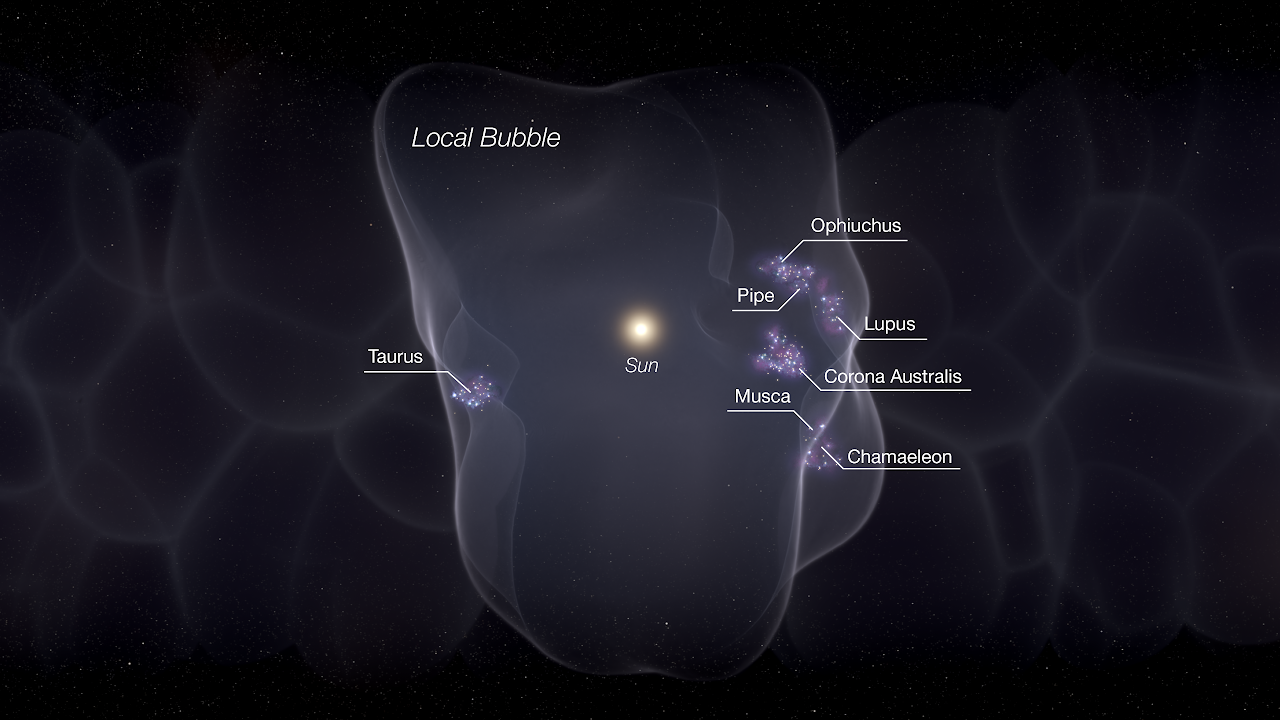
    giant bubble
    Local Bubble © Harvard Dataserve

    We are all surrounded by a 1,000 light-years old huge “giant bubble” formed by the explosion of a dozen or so stars. Known as the Local Bubble, it is just one of the countless similar bubbles produced by supernova fallout in our galaxy. According to scientists, the Earth and Solar System are located in the middle of the Local Bubble.

    The team of scientists, led by Theo O’Neill, research assistant at the Center for Astrophysics at Harvard & Smithsonian, has created “the first 3D map of the magnetic field on a superbubble.”

    “For the first time, there is an estimate of what 3D space looks like outside the Solar system,” said astronomer Alyssa Goodman, the study’s advisor.

    giant bubble
    Local Bubble © Harvard Dataserve

    According to research, the explosion of at least 15 massive stars caused this bubble to form. Astronomers showed “the first-ever 3D map of a magnetic field over a superbubble” on Wednesday at the American Astronomical Society‘s 241st annual meeting. You can watch a recording of the conference here.

    Theo O’Neill, from the University of Virginia, said: “Space is full of these wonderful bubbles that lead to the formation of new stars and planets and affect the general shapes of galaxies. By learning more about the exact mechanisms that drive the Local Bubble, which the Sun lives in today, we can learn more about the evolution and dynamics of superbubbles in general.”

    giant bubble
    Local Bubble © Harvard Dataserve

    In the 1970s, astronomers realized that no stars had formed in the vast vacuum for about 14 million years. After that, the huge void was named “Local Blob”. It is known that hydrogen and helium are dense on the surfaces of these areas, thus enabling new star formation in these areas. The Milky Way, and many other galaxies, is covered by a magnetic field that gently attracts stars, dust, and gas into mind-boggling structures such as giant, bone-like filaments. Astronomers aren’t sure what causes the galaxy’s magnetic fields, according to.

    “We’ve calculated that about 15 supernovae have gone off over millions of years to form the Local Bubble that we see today,” stated Zucker, a NASA Hubble Fellow at STScI.

    Zucker wonders, “Where do these bubbles touch? How do they interact with each other? How do superbubbles drive the birth of stars like our Sun in the Milky Way?”

    “From a fundamental physics standpoint, we’ve known for a long time that magnetic fields must play important roles in many astrophysical phenomena,” Harvard professor and Center for Astrophysics astronomer Alyssa Goodman, who was one of the mentors for the research program, said in the statement. “We can piece together the history of star formation around us using a wide variety of independent clues: supernova models, stellar motions, and exquisite new 3D maps of the material surrounding the Local Bubble.”

    Astronomers first theorized that superbubbles were pervasive in the Milky Way nearly 50 years ago. “Now, we have proof — and what are the chances that we are right smack in the middle of one of these things?” asks Goodman. She explains that if such bubbles are rare in our Milky Way Galaxy, it is statistically unlikely that the Sun would be centered in one.

    3d map Center for Astrophysics (CfA) Earth GEN Local Bubble NASA Solar System
    Share. Facebook Twitter Pinterest LinkedIn Tumblr Email
    adminparamet
    • Website

    Related Posts

    MVRDV Designs Urban Revivo’s Beijing Flagship Store in Sanlitun

    July 23, 2026

    Morandi Bridge Collapse Ex-CEO Sentenced to 12 Years

    July 23, 2026

    MVRDV Wins Shift Embassy Competition with Rotterdam ROCKS!

    July 23, 2026
    Add A Comment
    Leave A Reply Cancel Reply

    Demo
    Top Posts

    Design Reviews Are Moving Beyond Still Images and Animations. D5 3.1 Shows What’s Next.

    July 23, 20268 Views

    tetsstststtt

    July 23, 20264 Views

    World Architecture Festival Unveils 2026 Shortlist Featuring 416 Projects Worldwide

    July 23, 20264 Views

    15 Picturesque Neighborhoods Around the World Every Design Lover Should Visit

    July 23, 20263 Views
    Don't Miss

    tetsstststtt

    By adminparametJuly 23, 2026

    Soundscape in Architecture: Designing Through Sound

    July 23, 2026

    MVRDV Wins Shift Embassy Competition with Rotterdam ROCKS!

    July 23, 2026

    Shanghai’s Pollinator Machine Installation Brings Ancient Evolution to Life

    July 23, 2026
    Stay In Touch
    • Facebook
    • Twitter
    • Pinterest
    • Instagram
    • YouTube
    • Vimeo

    Subscribe to Updates

    Get the latest creative news from SmartMag about art & design.

    Demo
    About Us
    About Us

    Your source for the lifestyle news. This demo is crafted specifically to exhibit the use of the theme as a lifestyle site. Visit our main page for more demos.

    We're accepting new partnerships right now.

    Email Us: [email protected]
    Contact: +1-320-0123-451

    Our Picks

    tetsstststtt

    July 23, 2026

    Soundscape in Architecture: Designing Through Sound

    July 23, 2026

    MVRDV Wins Shift Embassy Competition with Rotterdam ROCKS!

    July 23, 2026
    Most Popular

    Design Reviews Are Moving Beyond Still Images and Animations. D5 3.1 Shows What’s Next.

    July 23, 20268 Views

    tetsstststtt

    July 23, 20264 Views

    World Architecture Festival Unveils 2026 Shortlist Featuring 416 Projects Worldwide

    July 23, 20264 Views
    Facebook X (Twitter) Instagram Pinterest YouTube LinkedIn TikTok
    • Home
    • Buy Now
    © 2026 ParametricArchitecture. All Rights Reserved. By utilizing this website, you are consenting to our User Agreement, Privacy Policy, and Cookie Statement. In compliance with the privacy laws of Turkey and the United States, we recognize and respect your rights. Please be aware that we may receive commissions for products bought through our affiliate links. Unauthorized reproduction, distribution, or transmission of any material from this site is strictly forbidden without prior written permission from ParametricArchitecture.

    Type above and press Enter to search. Press Esc to cancel.

    Sign In or Register

    Welcome Back!

    Login to your account below.

    Lost password?