


To enter Granada is to feel the gaze of the Alhambra, a citadel that has watched over the city for centuries. More than a monument, it is a living record of the Nasrid dynasty, the last Muslim rulers of Spain, who between the 13th and 15th centuries shaped this hilltop palace into both fortress and sanctuary. Declared a UNESCO World Heritage Site, the Alhambra endures as a treasure of Islamic architecture in Spain.
Historical Context: The Nasrid Dynasty in Decline
The Alhambra was constructed during a pivotal period in history. By the 1200s, Islamic rule in Spain, which had once spread across almost the entire Iberian Peninsula, had shrunk to a single kingdom: Granada. Surrounded by Christian powers, the Nasrid rulers knew their dynasty was fragile. The Alhambra became their answer. Its hilltop position allowed them to watch over Granada like guardians, while its dazzling palaces showed the world that their culture was still strong. The Alhambra was a shield and stage, built to protect but also to impress.
The Fortress: Alcazaba
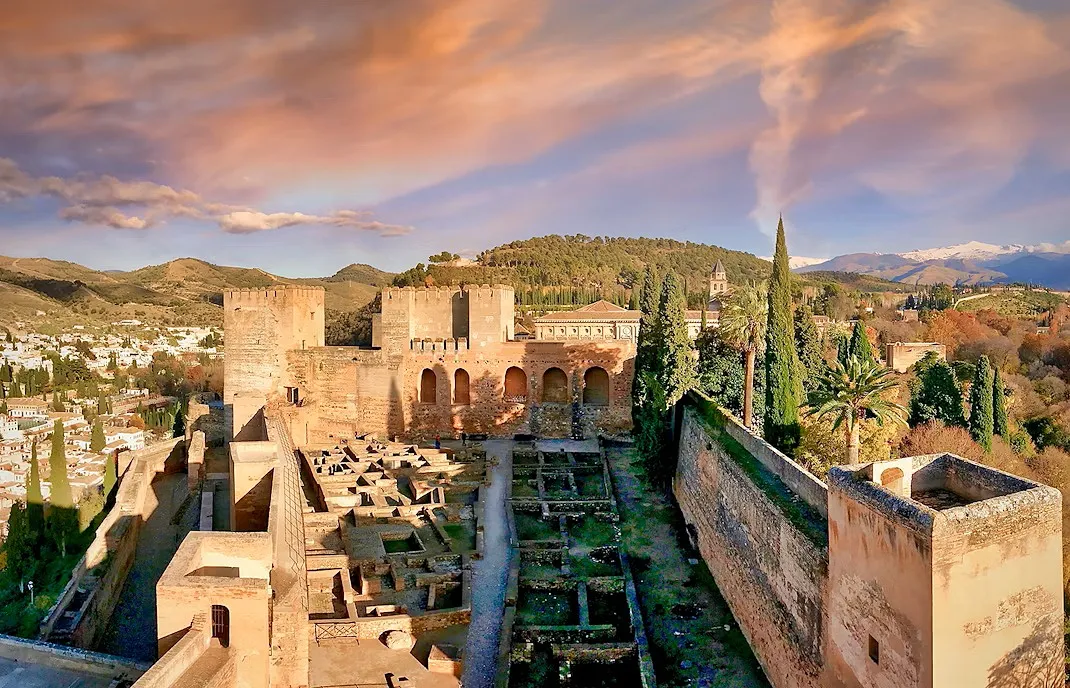
The oldest part of the Alhambra is the Alcazaba, a massive fortress with thick walls and watchtowers. From here, soldiers could guard the city and spot enemies from miles away. Even today, the Torre de la Vela, the main watchtower, dominates the Granada skyline. The fortress shows that the Alhambra was first and foremost a place of defense. Its walls gave security, but they also symbolized the power of the Nasrid dynasty to hold its ground against stronger neighbors.
The Palaces
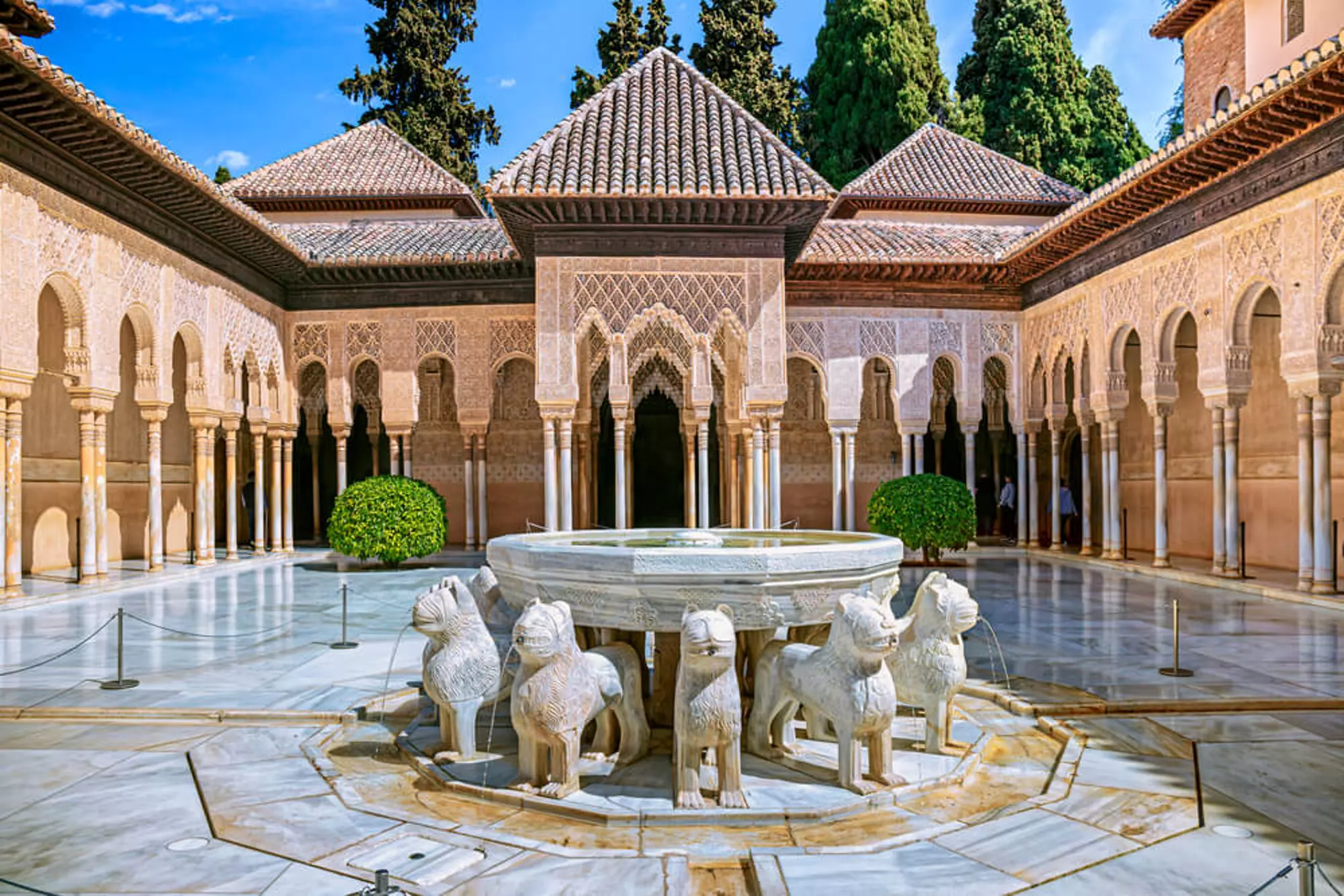
Over time, the rulers added palaces inside the walls of the fortress. These palaces turned the Alhambra into a royal city. Each new ruler added rooms, courtyards, and gardens, shaping the Alhambra into a living complex that grew with time.
The Palace of Comares, built under Muhammad V, was the center of political life. Its Court of the Myrtles, with a long rectangular pool, created a space of calmness. Water mirrored the walls and arches, making the palace appear twice as tall and twice as grand.
The Palace of the Lions, built around the same time, became the symbol of Nasrid architecture. At its heart lies the famous fountain supported by twelve carved marble lions. Around it, airy halls and galleries open toward the courtyard, promoting openness. These palaces reveal that the Nasrids ruled not through brute force alone but also through the language of beauty.
Gardens of Alhambra
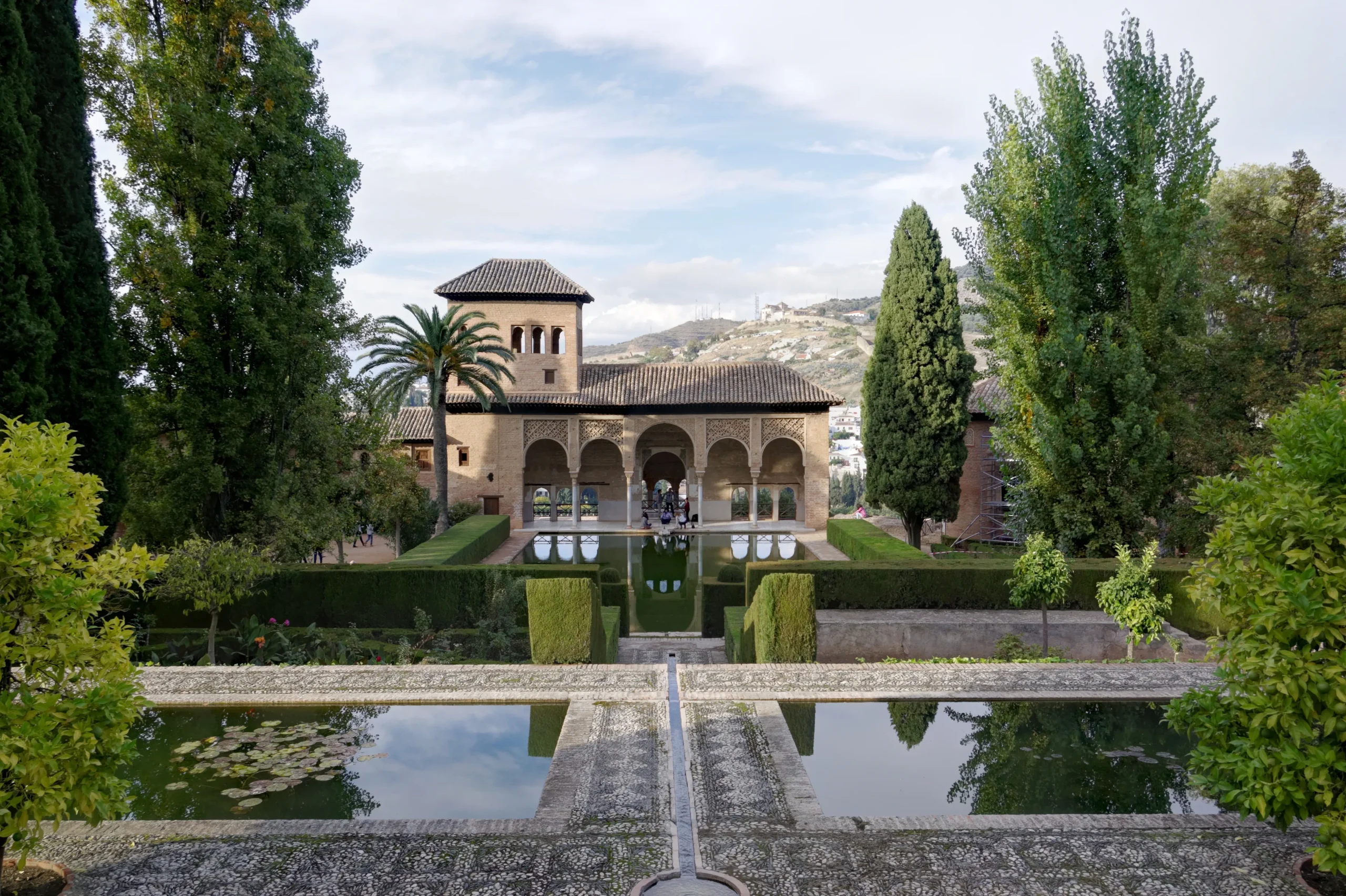
Alhambra is known for its use of water. In Islamic culture, flowing water and greenery symbolized paradise, and the architects of the Alhambra used this idea to bring life into stone. Pools, fountains, and channels were placed to cool the air, create gentle sounds, and reflect light. The Court of the Myrtles shows how still water could transform architecture, while the Court of the Lions demonstrates how moving water could organize an entire space, with four channels flowing outward like rivers of paradise.
Beyond the palaces lies the Generalife, the summer retreat of the Nasrid rulers. Its terraced gardens, orchards, and fountains provided a peaceful escape from courtly duties. Walking through shaded paths with the sound of water everywhere, one can understand how deeply the Nasrids connected architecture with nature.
Geometry
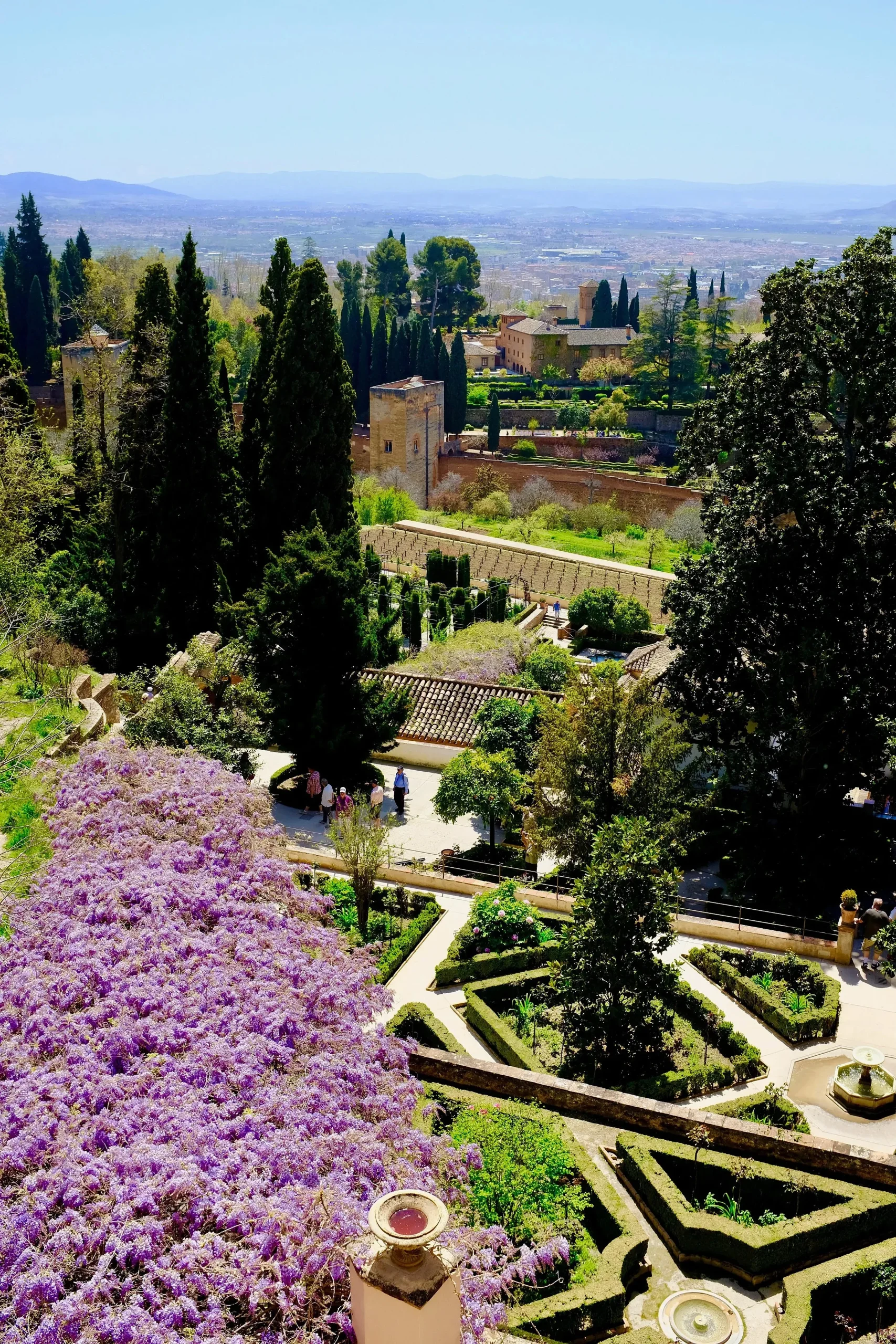
If the Alhambra is famous for one thing, it is for its patterns. Geometry is everywhere—on walls, floors, ceilings, and even in the way spaces are planned. Islamic architects and artisans used mathematics to create repeating stars, polygons, and arabesques. These designs reflected a belief that the universe itself is built on order and harmony and that geometry is a way to glimpse the infinite.
When sunlight moves through arches or across muqarnas ceilings, these patterns come alive. They shift, sparkle, and change with every moment of the day. Even though the materials were simple, such as stucco, wood, and tile, the designs turned them into something magical.
Poetry in Walls
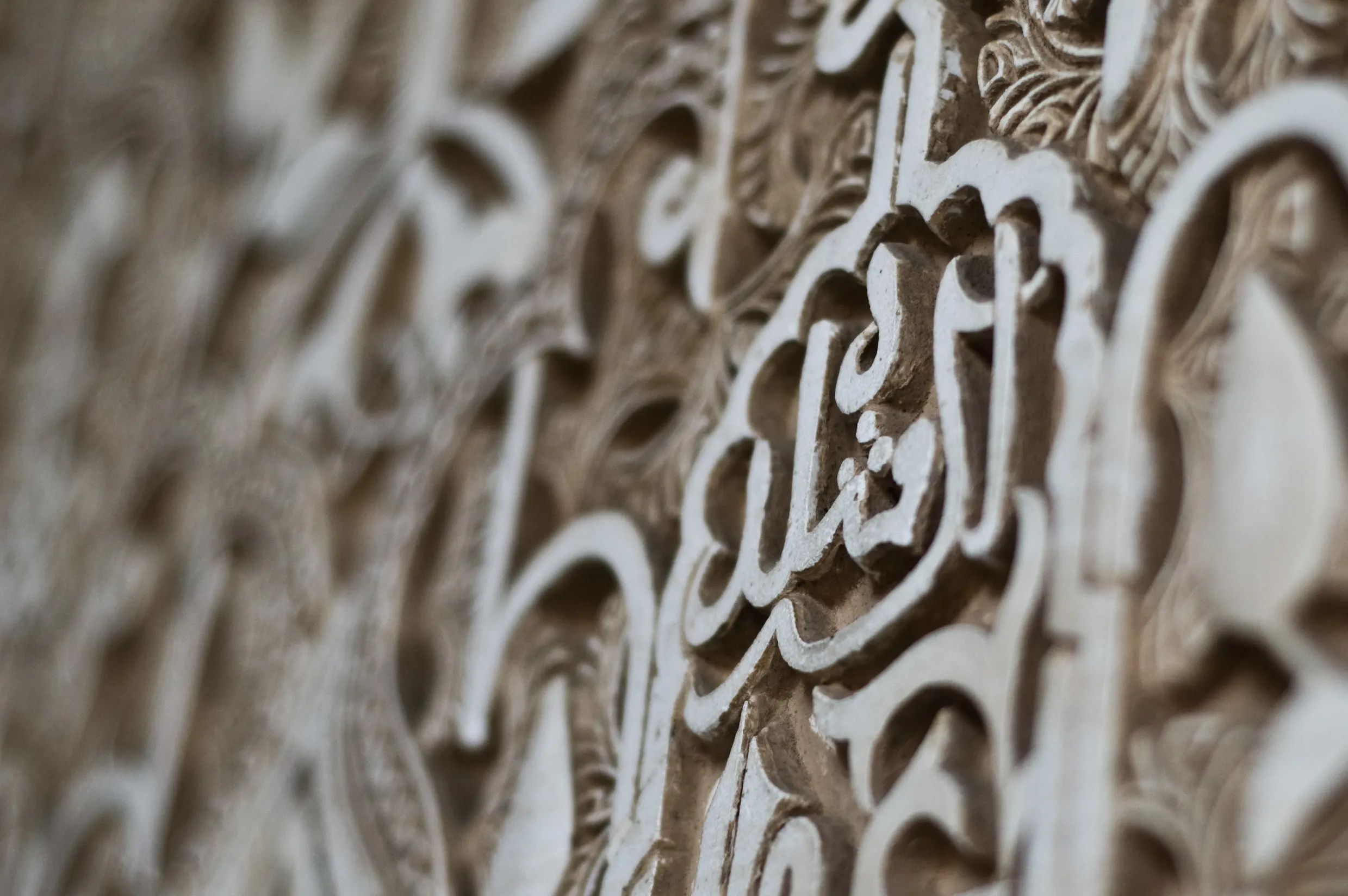
Alhambra’s walls are covered with more than 10,000 inscriptions in Arabic. Some are verses from the Qur’an, reminding visitors of faith. Others are poems written by court poets, praising the ruler, describing the beauty of the palace, or reflecting on the nature of life. The Nasrid motto, “There is no victor but God,” is repeated throughout, like a heartbeat running through the complex.
After the Reconquista
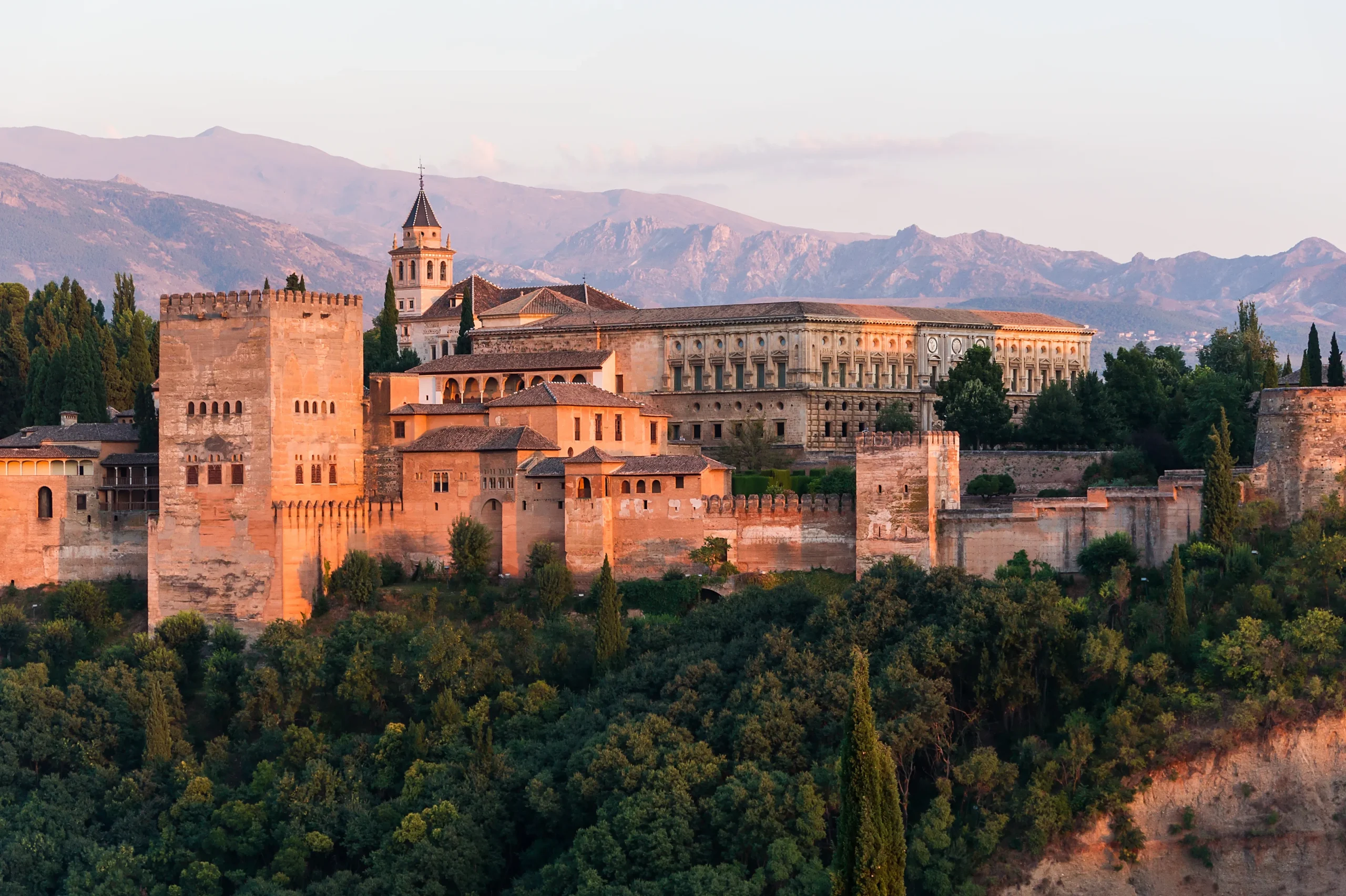
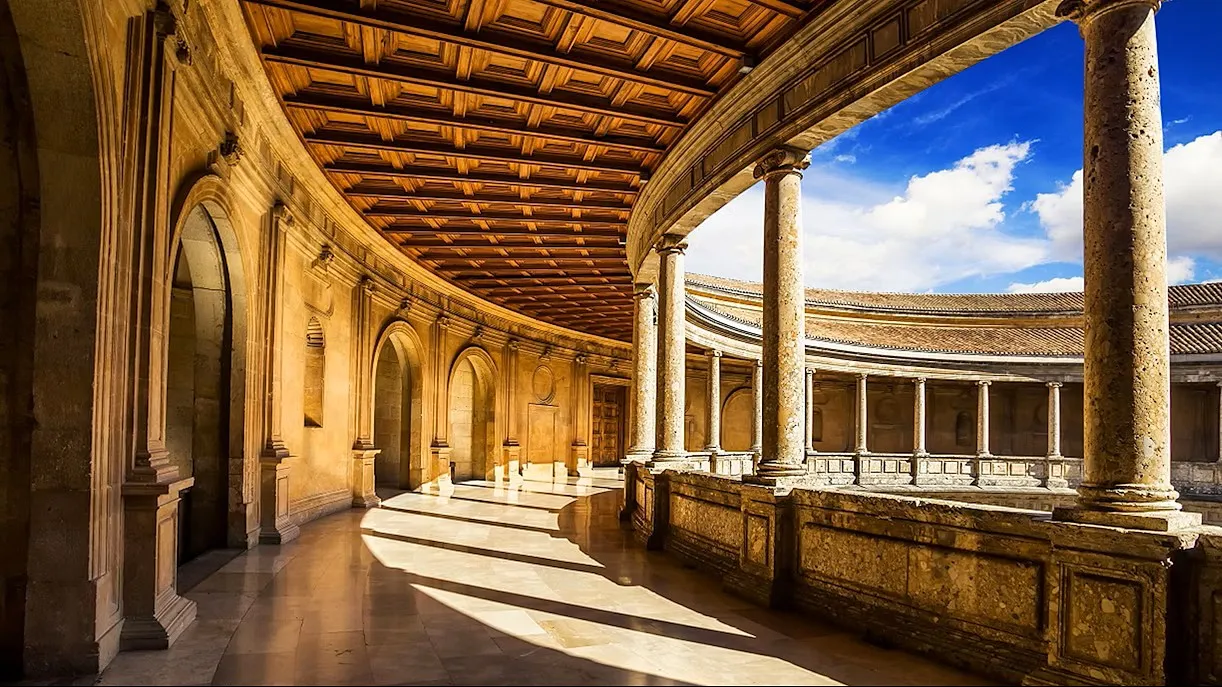
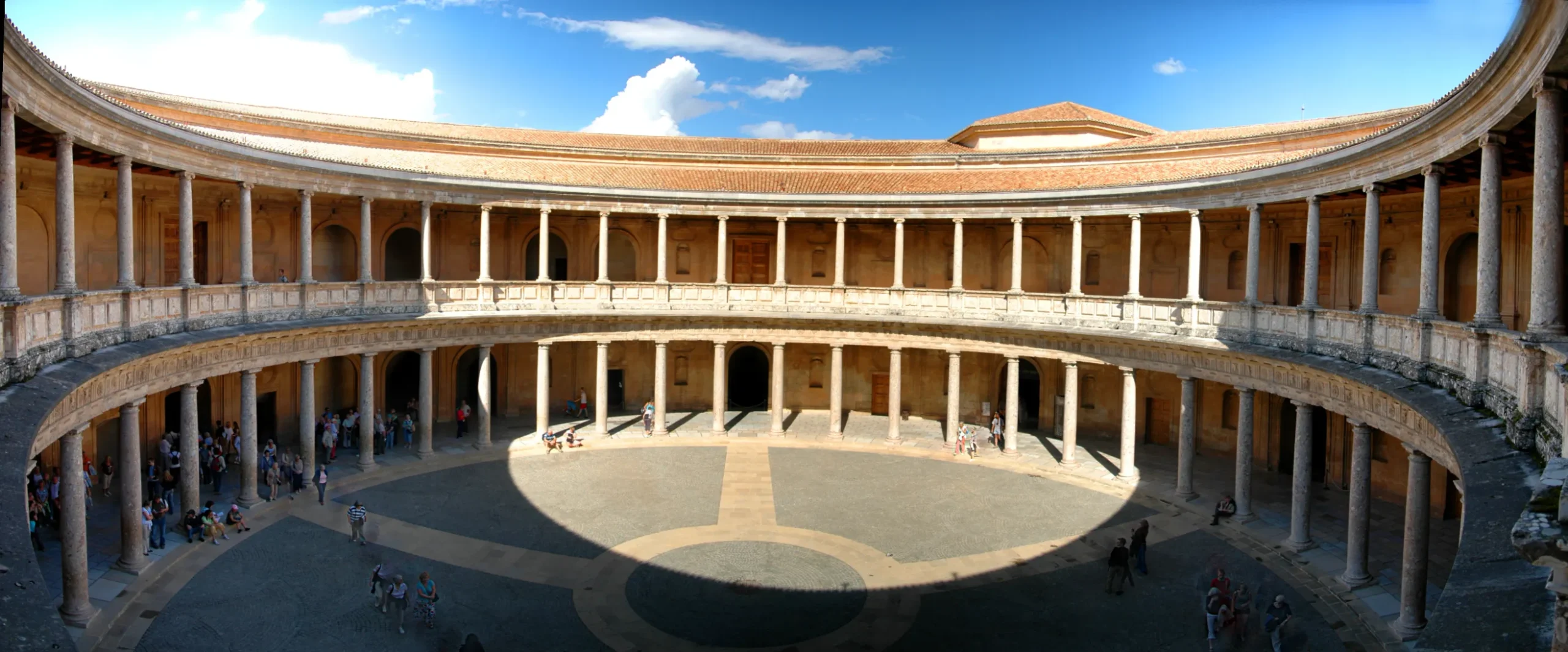
The Alhambra’s story did not end with the Nasrids. In 1492, Granada was captured by Ferdinand and Isabella, ending Muslim rule in Spain. The Christian rulers kept most of the Alhambra but also added their own touches. The most dramatic change came with the Palace of Charles V, a Renaissance building with a circular courtyard built right inside the Islamic complex. Over time, some areas fell into ruin, but restoration efforts in later centuries saved the Alhambra from being forgotten.
Alhambra in Granada remains not only one of Spain’s most visited landmarks but also one of the most influential works of architecture in the world. Declared a UNESCO World Heritage Site in 1984, it continues to embody the dialogue between Islamic and Christian traditions.
Its courtyards, fountains, and palaces reveal how architecture can act as both a symbol of political power and a canvas for poetry, geometry, and spiritual reflection. For contemporary architects and designers, the Alhambra offers more than historical beauty; it provides a framework for rethinking how built space can merge with nature, water, and light to create an immersive human experience. From digital parametric modeling to sustainable landscape design, its influence is felt across disciplines, reminding us that true architectural innovation lies not only in form and function, but in the ability to inspire across centuries
